I hold a Florida roofing license (CCC1332751) and a general contractor license (CGC1528750), and every fall the phone rings with the same problem: a leak that showed up during a storm, on a roof that had a warning sign visible from the driveway in September. Most of what fails in October was findable in September. Here is the check I would do on your house, in the order I would do it.
From the ground — five minutes
- 🔭 Lifted or missing shingles and tiles. Walk the whole perimeter and look up. A tile sitting crooked or a shingle tab curling at the edge is the first thing wind takes.
- 🧱 Ridge and hip lines. Sight down them. They should be straight. A dip means a deck or truss problem underneath, not a shingle problem.
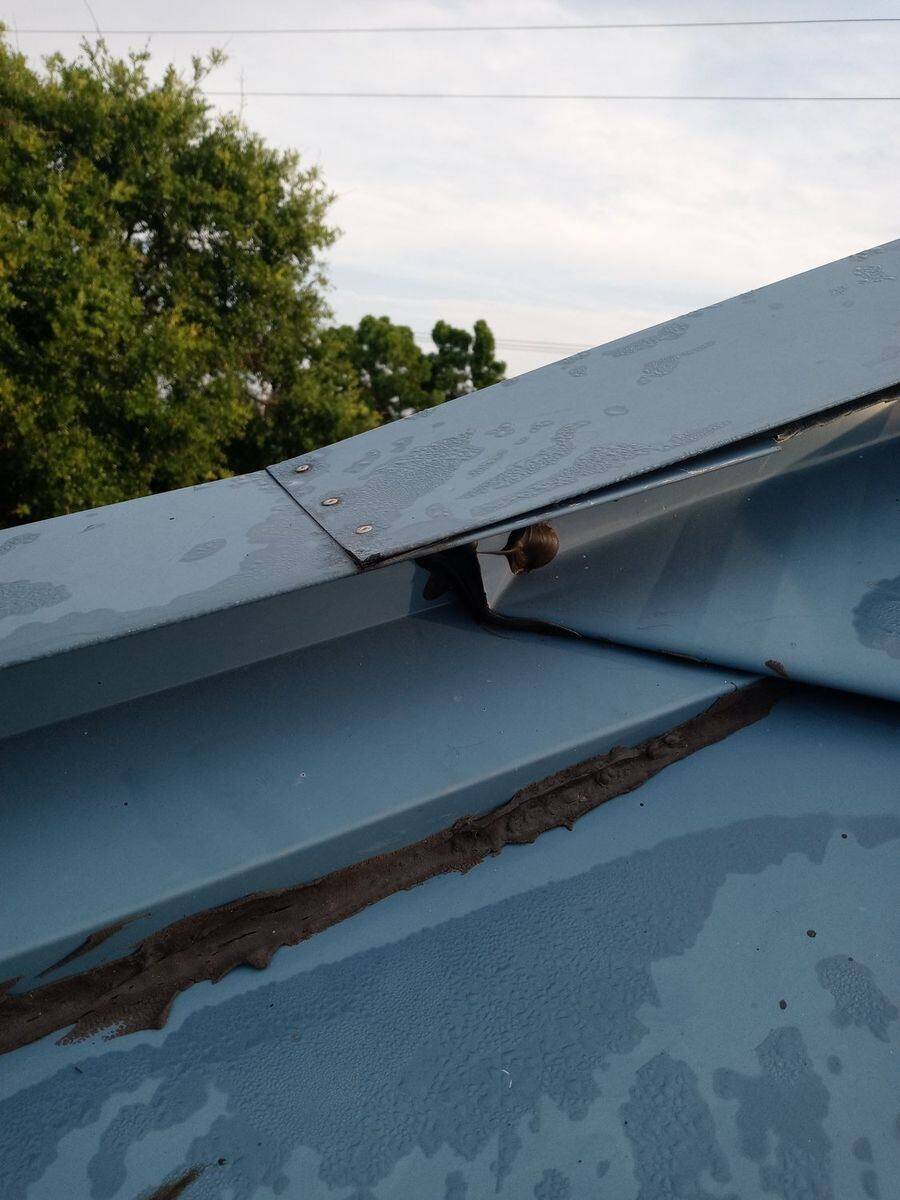
- 🌊 Flashing at every penetration. Vents, the chimney, the satellite mount someone screwed through your roof — look for rust, gaps, or sealant that has gone gray and cracked.
- 🍂 Gutters and valleys. Granules piling in the gutter mean the shingles are shedding. Debris in a valley holds water against the roof for days after a storm.
- 🌳 Tree limbs. Anything overhanging the roof is a projectile in a tropical storm. Trim it now, while a tree crew can get to you in a week instead of a month.
In the attic — five minutes with a flashlight
Go up on a bright afternoon with the lights off. Pinpricks of daylight are holes. Then look for water stains on the underside of the deck, especially around vents and along the eaves, and for any darkened or sagging sheathing. Rusted nail tips poking through the deck are normal; rust streaks running down from them are not. If you have blown insulation, a compacted or discolored patch is where water has been landing.
Paperwork — five minutes at the kitchen table
Find your last permit and your last wind-mitigation report. Two things matter here. First, Florida's 25% rule: when repairs in a twelve-month period exceed 25% of a roof section, the code can require that section — or the whole roof — be brought up to current code. That turns a "small repair" into a re-roof decision, and you want to know where you stand before a storm forces the question. Second, the wind-mit form documents hurricane clips or straps, a properly nailed deck, and a secondary water barrier; each one you can prove cuts the wind portion of your insurance premium. If your roof was replaced and nobody pulled a permit, you have a resale problem and possibly a claim problem, and it is better to find out in September.
What needs a call
- Any daylight in the attic, any active stain, any sagging line — call now, not after the next storm.
- Ten or more lifted tiles or shingle tabs on a roof over fifteen years old — you are likely near the 25% line and should get a written assessment.
- Flashing failures — cheap to fix, expensive to ignore, and the most common source of the leaks we chase.
- Roof over twenty years old with no wind-mit on file — get the inspection; it usually pays for itself on the next renewal.
We pull every job through permit and final county inspection, and we work the whole county — Loxahatchee, The Acreage, Wellington, Royal Palm Beach, West Palm Beach, Jupiter, Boynton, and the Gardens. If you want a second set of eyes on what you found, send photos and we will tell you plainly whether it is a repair, a re-roof, or nothing.