Homeowners want a number before they let a roofer in the door. I get it. After a storm, every truck on the street has a sign on it, and the first question is always the same: what is this going to cost me? So on Monday morning I sat down and built the answer into our website. By lunch all three were built, and each one sends its leads straight to our office. Here is what they do, how we built them, and what I would tell another contractor thinking about doing the same.
What a homeowner gets
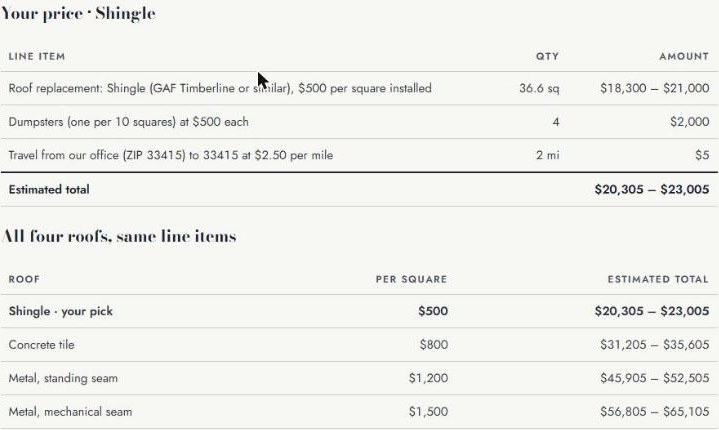
- 🏠 Instant Roof Quote. Type your address. We measure the roof from satellite data and show a price range for shingle, concrete tile, standing seam metal and mechanical seam metal, with dumpsters and travel listed as their own lines. No surprises buried in a per-square number.
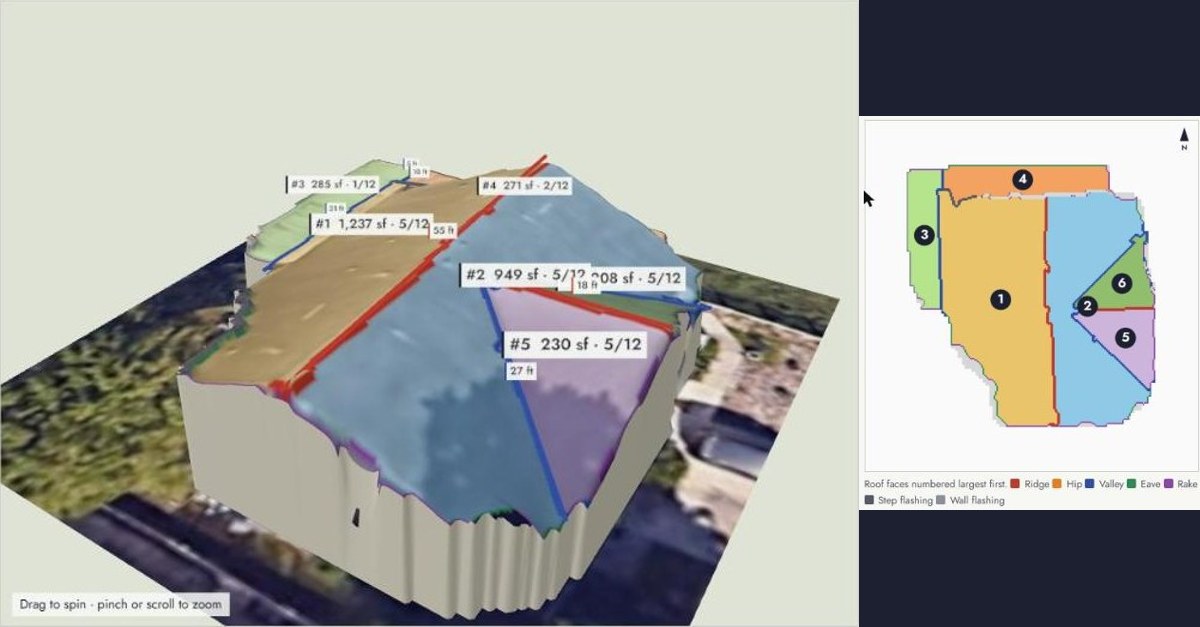
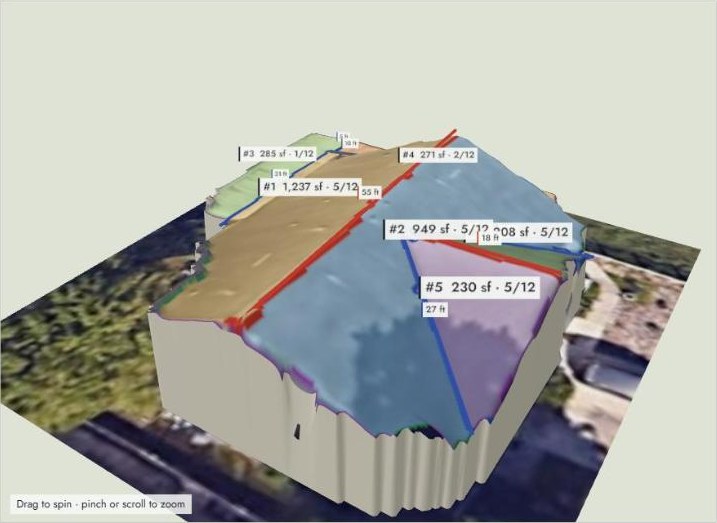
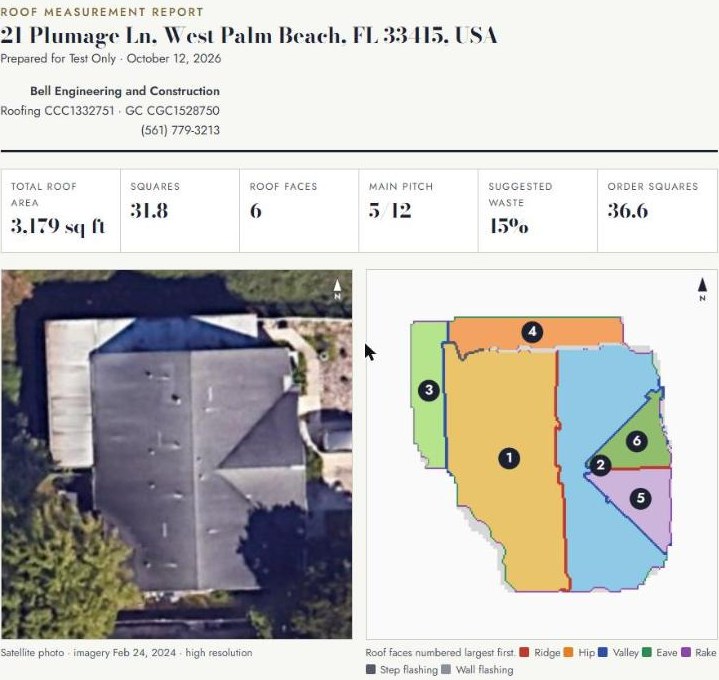
- 📐 3D Roof Report. Your actual roof, rebuilt in 3D from satellite height data. You can spin it and zoom it. Every roof face is numbered with its area, pitch and the direction it faces, and the report lists ridge, hip, valley, eave and rake lengths. It prints as a PDF.
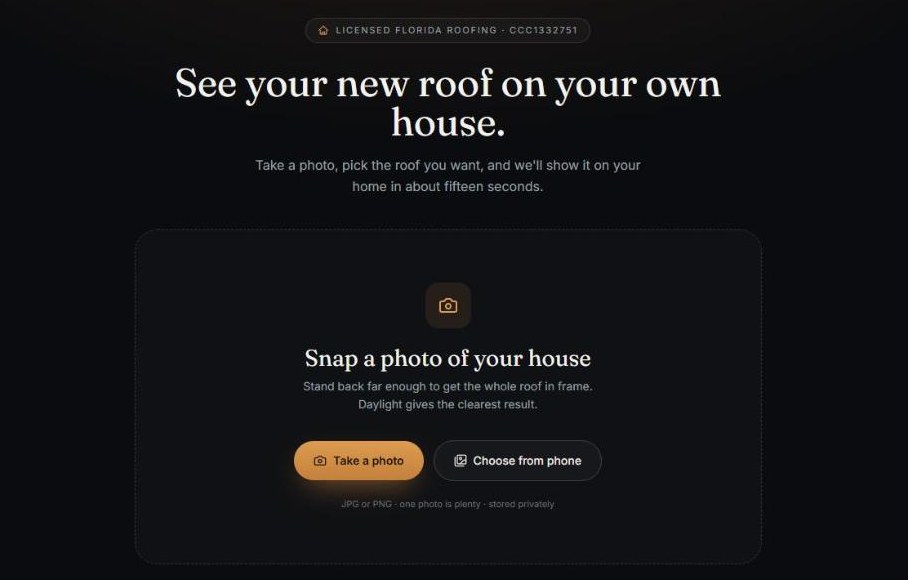
- 📷 Roof Visualizer. Snap a photo of your house, pick a roof and a color, and see the new roof on your own house in about fifteen seconds.
How the 3D measuring works, in plain English
Google flies and photographs most of Florida, and for many homes it also publishes a height map: a grid of measurements every few inches that says how high each spot on the roof is. It also publishes its own read of where the roof faces are, with each one's pitch and the direction it faces.
Our page pulls that data for your address, matches every point on the roof to the face it belongs to, and builds the 3D model from it. Once every point knows its face, measuring is arithmetic. Area comes from the face itself, pitch from the slope, and the edges from where two faces meet. If both faces slope down away from a line, it is a ridge or a hip. If they slope down toward it, it is a valley. Where a face runs out to open air, it is an eave on the low side and a rake on the sloped side.
That gives us the same list a material order starts from: squares, the main pitch, feet of ridge cap, feet of drip edge, valley metal. The report also shows a waste table and suggests a waste factor from how complicated the roof is.
How the price works
We price the way we bid: squares with waste, times our installed price per square for each material. Then two lines most online calculators hide. One is dumpsters: one per ten squares, priced per dumpster. The other is travel from our office, figured by the mile from the ZIP code you enter, so a job in the Panhandle is priced honestly against a job down the street. Repairs are different. Nobody can price a leak from space, so a repair request shows the measurements, the travel line, and a free inspection to price the actual work.
The visualizer
A competitor ran a Facebook ad for a "see your dream roof" tool. It was good. Rather than license someone else's, we built our own on Base44, an AI app builder. The homeowner takes a photo, picks shingle, concrete tile, standing seam or 5V crimp metal and a color, and an AI image model repaints only the roof on their photo. The house, the yard and the sky stay the same. It took a few rounds of edits to dial in, and each round was a sentence, not a ticket to a developer.
Wiring it into the office
A lead tool is worthless if the lead sits in an inbox. Every one of these tools posts to the same lead relay our whole website uses. It stores the lead the moment it arrives, emails me, and sends the homeowner a reply right away. The homeowner can upload photos, describe the problem, and pick a day and time for a free inspection. Our Lead Desk then opens a numbered bid folder, writes the quote from a template and leaves an email draft for me to send. Every price on the site matches the price in the written quote, because both come from the same table.
What it took
One morning. I worked with Claude, Anthropic's AI, in a single conversation. It wrote the pages, tested them against live satellite data on our own office roof, fixed what it found (trees showing up as roof, a button that cleared the wrong field), and committed the work to our website. Base44 built the visualizer from a few paragraphs of plain English. The satellite and address data come from Google, priced per lookup at a few cents, and the expensive lookup only runs after a homeowner submits the form. My job was the part no software can do: the prices, the materials we stand behind, and the rules we will not bend.
The rules we kept
- ⚖️ No insurance bait. Florida law (§489.147) bars contractors from soliciting roof insurance claims or offering anything in exchange for one. None of these tools mention claims, deductibles or gifts.
- 💵 Same price, cash or financed. We offer financing for qualified homeowners, and Florida's PACE law requires the price to be the same either way. Ours is.
- 🔍 Estimates say they are estimates. Satellite imagery can be months or years old, and trees hide roof edges. Every report says so, and we measure every roof on site before ordering material or signing a contract.
- 🔩 Straight talk on materials. We quote GAF Timberline shingles, Westlake concrete tile and Dynamic Metals panels, or similar. On 5V crimp we tell homeowners plainly that exposed fasteners carry a greater risk of leaks than concealed-fastener metal.
If you are a contractor reading this
Three things I learned. First, the data is already out there. Google's satellite and height data covers most Florida homes, and the hard part is turning it into something a homeowner understands in ten seconds. Second, the tool is only half the job. The half that makes money is the wiring: lead in, instant reply, folder, quote, call. Third, the AI builders are now good enough that the bottleneck is knowing your own business. Know your price per square, your materials and your rules, and the build goes fast.
Elsewhere on the site, if you are working on more than a roof: our guides to concrete restoration, what land clearing costs and the condo milestone inspection and SIRS rules.