RSB EmpireConstructionSeamless Gutters

Sheet G-101 · Bell Engineering & Construction

One length of aluminum, no seams to fail.

Seamless gutters roll-formed in your driveway and hung the same day — 5-inch and 6-inch K-style, 3x4 downspouts, guards, fascia repair, and replacement tied straight into roofing work. Our machine and our crew, across Palm Beach County. The owner inspects every job.

CGC1528750 General ContractorCCC1332751 RoofingEPA Lead-Safe Firm #NAT-F122701-2BBB A+ Accredited BusinessLicensed · Insured · Since 20091-Year Written Workmanship Warranty

Scope of Work

What we fabricate and hang

Why It Matters

Sixty-three inches of rain has to go somewhere

West Palm Beach averages roughly 63 inches of rain a year, and almost none of it arrives politely. It comes in summer afternoon cells that drop an inch or two in under an hour, and it comes sideways off the Atlantic in tropical weather. A roof is a very efficient collection surface: a modest 1,500-square-foot roof plane sheds well over 900 gallons in a single one-inch rain. Gutters are the only thing deciding whether that water leaves the property in a controlled line or lands in a trench two feet from your slab.

When that goes wrong here it goes wrong in a specific, expensive order. Water sheets over the front edge and hammers the bed below, splashing sand and organic debris up the wall. The eave stays wet, so the fascia board behind the gutter softens and the hangers lose their grip. The run starts to sag, which kills the pitch, which means the trough now holds standing water — and standing water in South Florida is a mosquito nursery with a lifespan measured in days. Meanwhile the ground at the foundation gets repeatedly saturated and dried, walkways and driveways settle at the edge, screen enclosures and patio slabs undermine, and the paint on the wall you just had done blisters from the bottom up.

None of that is a gutter problem in the homeowner's mind until it becomes a fascia problem, a soffit problem, a stucco problem, or a concrete problem — which is exactly why it should be handled by a contractor who does all four. Bell Engineering & Construction is a licensed general contractor and roofing contractor, so when we take the old gutter down and find soft fascia or a roof edge that was never detailed properly, we fix the actual cause instead of hanging new aluminum on rotten wood and calling it done.

How We Work

The machine comes to your driveway

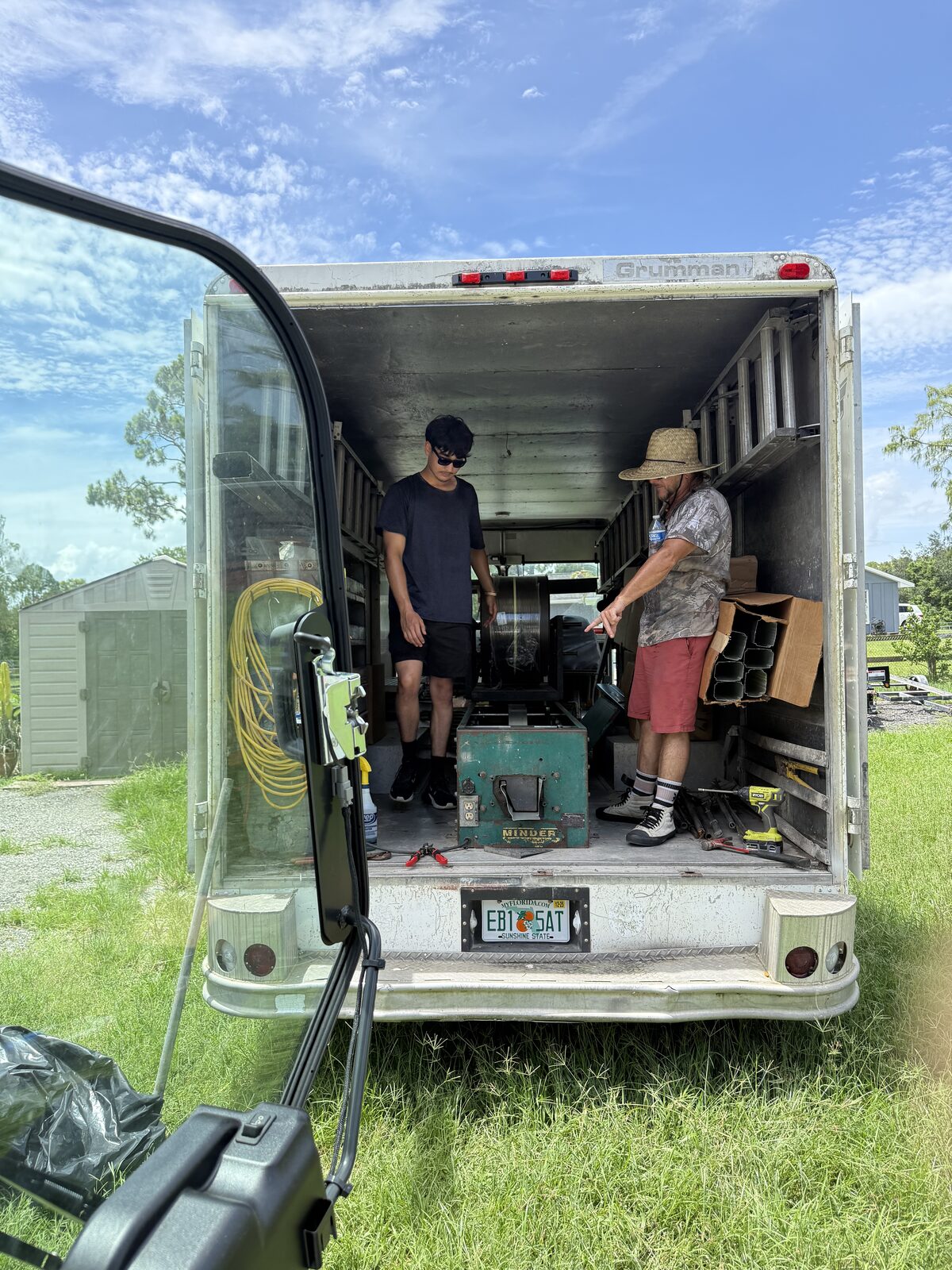
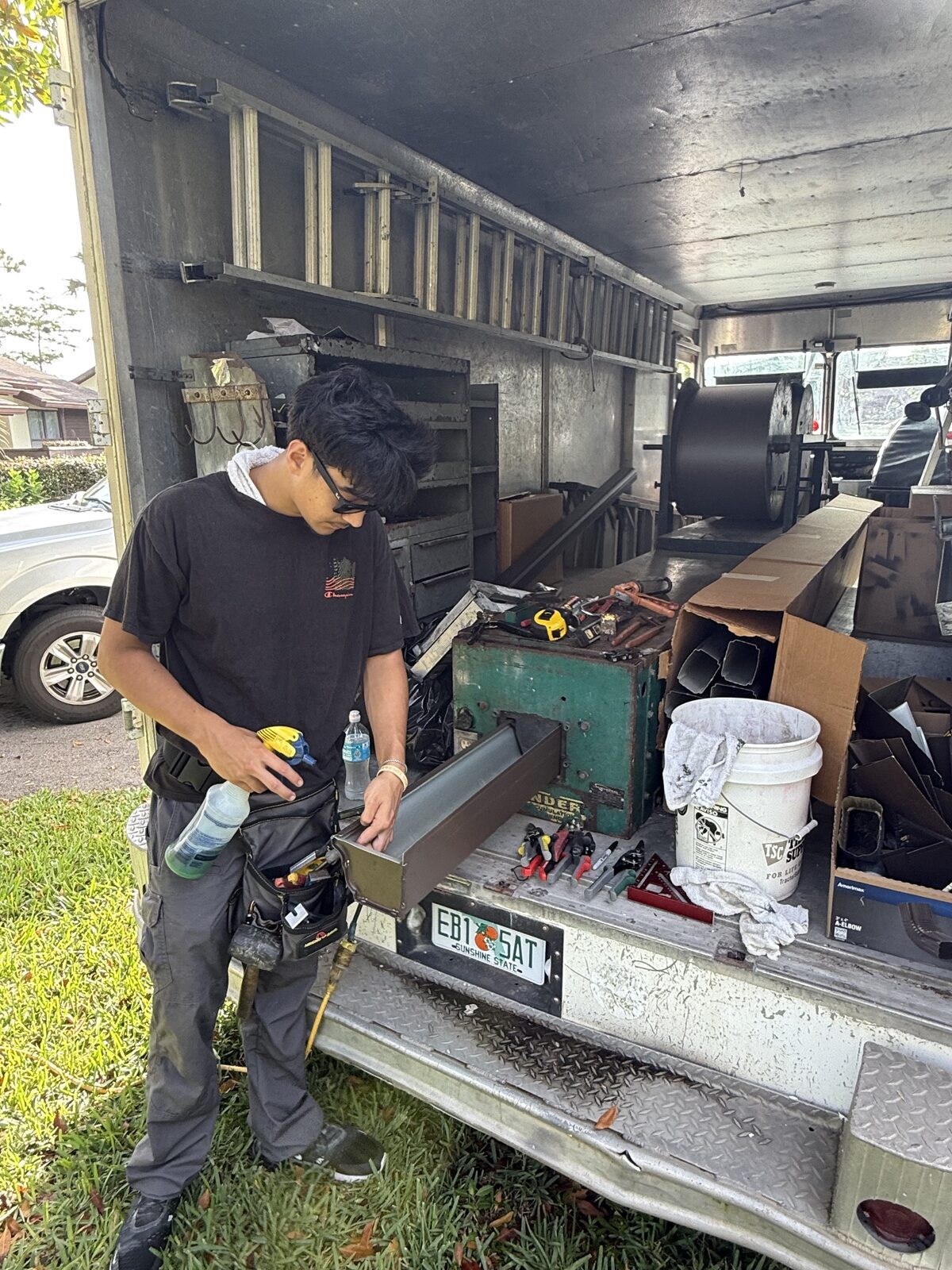
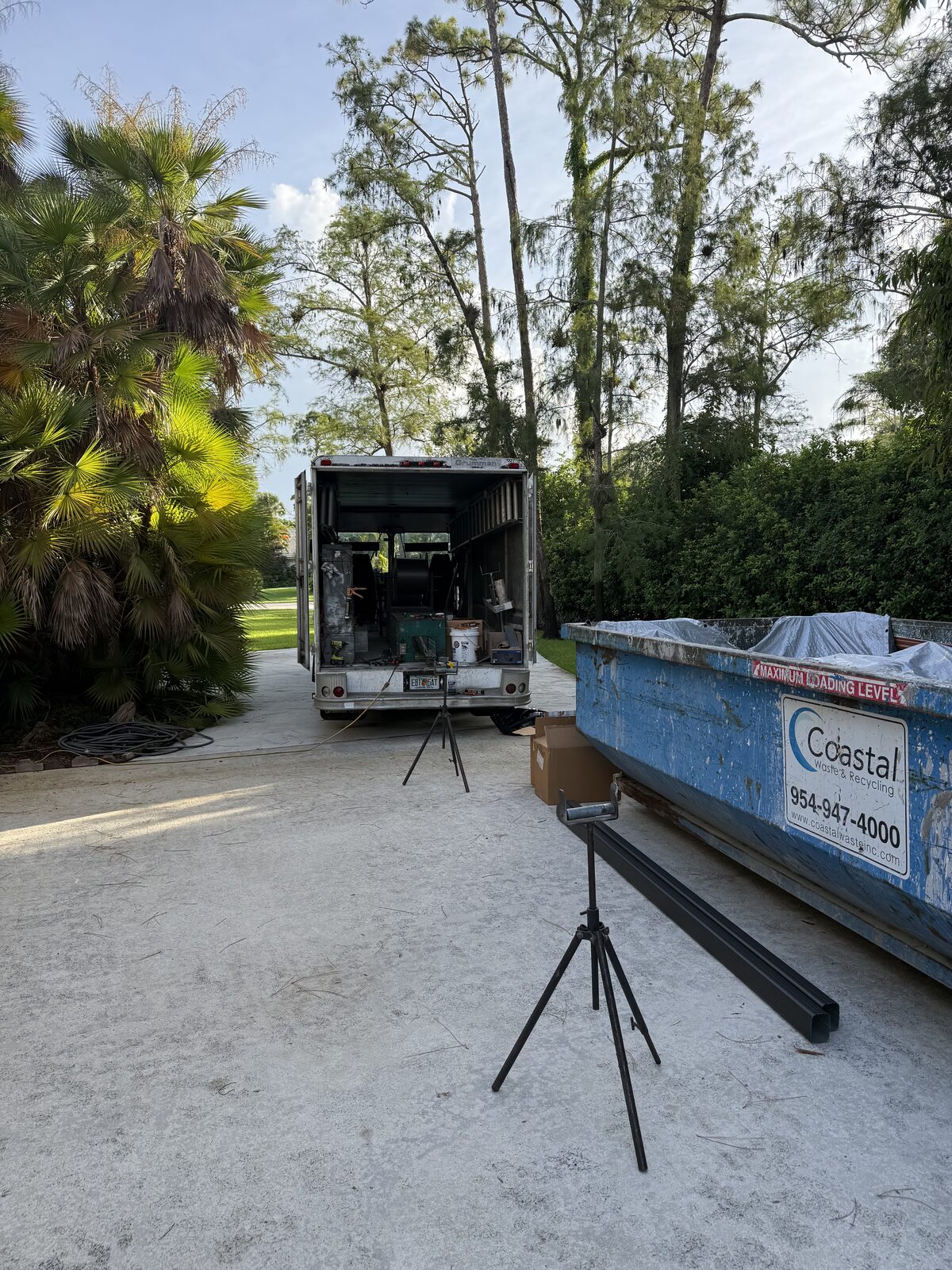
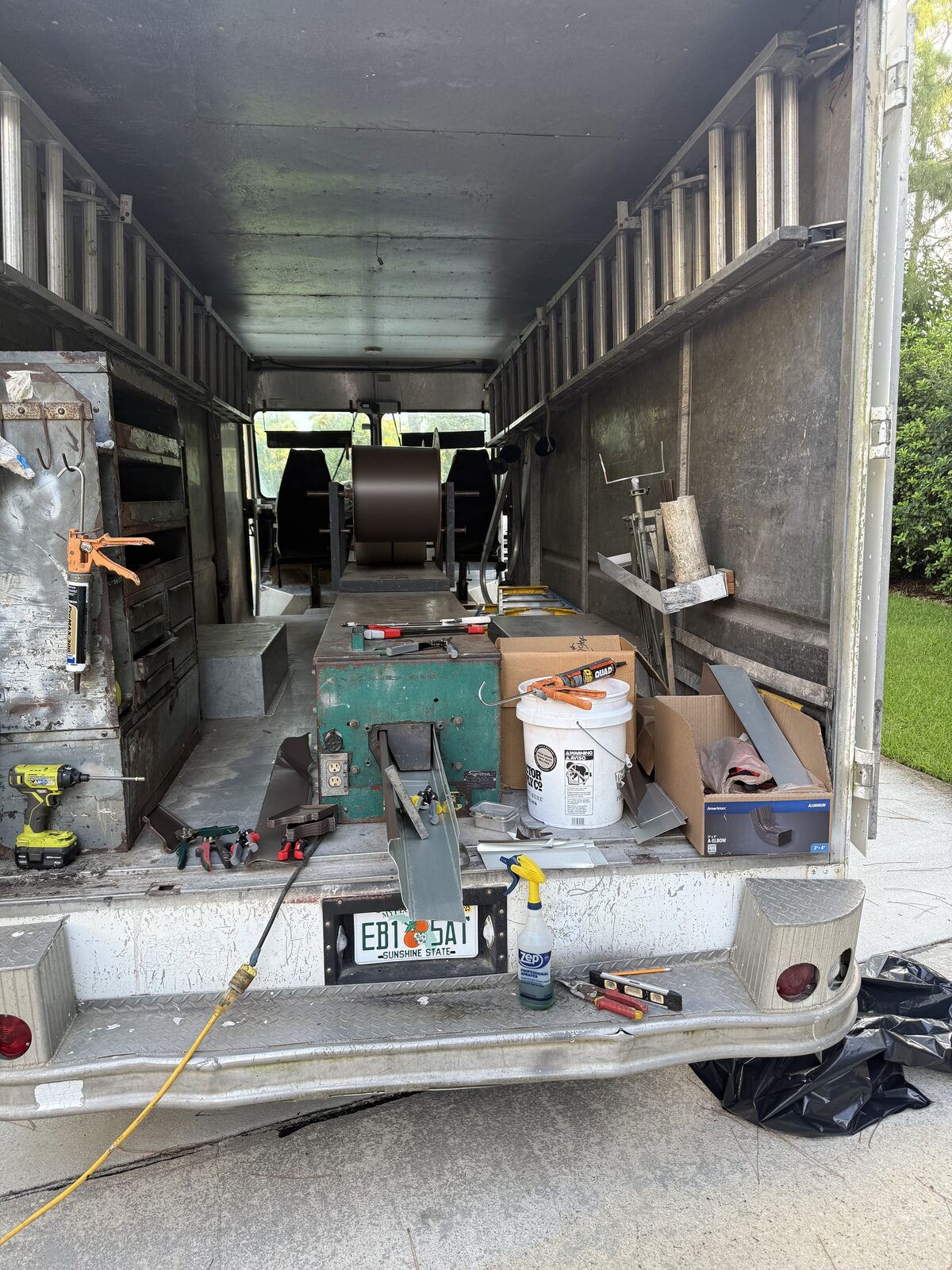
Seamless gutter is not a product you buy and install. It is a product that gets manufactured in front of your house, in the length your roof needs, on the morning it goes up. That is what the step van in the photographs below is: a roll-forming machine, a reel of aluminum coil, run-out stands, and everything needed to turn flat stock into a finished gutter profile on the spot.

1. Measure the roof, not just the eave

We walk every run and work out the roof area feeding into it, the pitch, where valleys concentrate water, and where the water needs to be released at ground level. That determines gutter size, downspout size and downspout count — in that order. Sizing from linear feet alone is how a house ends up with beautiful new gutters that still overflow at the corner every August.

2. Check what the gutter hangs on

A gutter is only as sound as the fascia behind it and the roof edge above it. Before anything is fabricated we look at the fascia board, the drip edge, and the first course of roofing. Rotten wood gets replaced and bad edge detail gets corrected while the eave is open — that access is worth more than the gutter itself, and it disappears the moment new aluminum goes up.

3. Roll it in one piece

The coil feeds through the machine and comes out the far side as a finished K-style trough cut to the exact length of the run — no joints, no ten-foot sections, no field-sealed laps waiting to open up in the sun. Corners are mitred and sealed, end caps fitted, and outlets punched where the downspouts were planned, not where they happen to be convenient.

4. Hang it, pitch it, prove it

Hidden hangers are fastened through the trough into solid framing at close spacing — South Florida gutters carry weight in a downpour and take wind at the roof edge, so hanger spacing and fastener choice are not places to save money. The run gets a deliberate fall toward each outlet, downspouts are strapped and elbowed to discharge away from the slab, guards go on if the tree cover justifies them, and then we run water through it and watch where it goes before we pack up.

Same-day fabrication also means the odd condition gets solved instead of scheduled. A bay return, a short section over an entry, a length that measures long once the old gutter is off — the machine is right there. See also roofing & roof replacement, which is where most gutter work should really begin.

Also On The Books

Wellington, 2025 — a two-story with a long eave

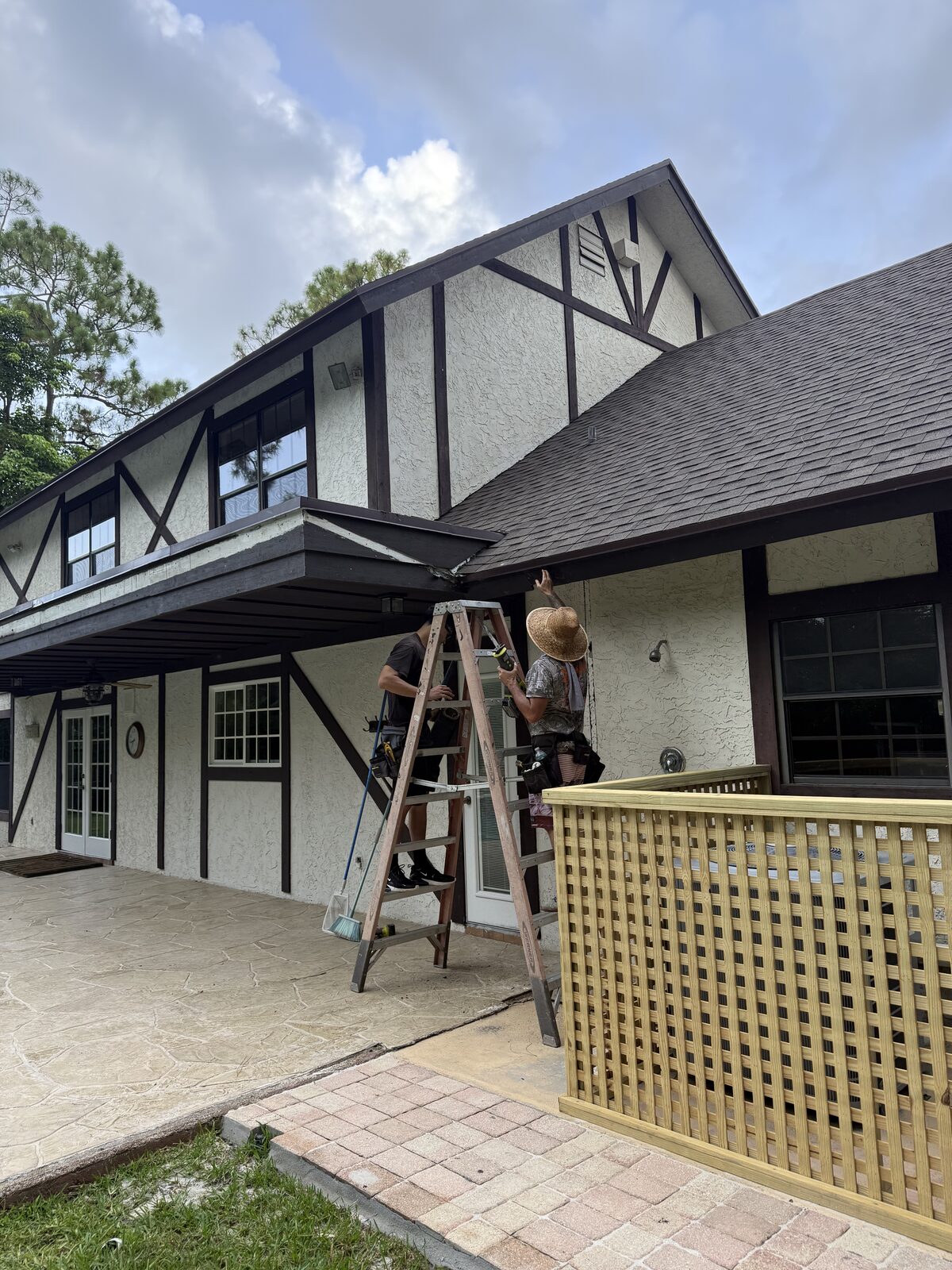
The same van, the same machine, a different problem. This Wellington home is a two-story stucco with dark half-timbered Tudor detailing, a broad shingle roof, and an eave that runs long over a paved patio and pool deck — the kind of roofline where a single undersized run overshoots at one end and stains the wall for years before anybody connects the two.

Because the gutter is formed at the house, a long two-story run goes up as one uninterrupted length instead of three sections spliced in mid-air over a patio. Photographs from the day show the fabrication rig set up on the driveway with run-out stands and a finished downspout length staged beside it, the coil loaded on the reel inside the van, and the crew working the eave line from ladders. Wellington is Tier-A territory for us — see construction services in Wellington for the town's housing stock, HOA reality, and what else we do out there.

Grumman step van set up on a Wellington FL driveway with gutter run-out stands and a finished dark downspout length staged alongside a waste container
01 · Set up on the driveway — run-out stands out, container staged for the old gutter.
Inside the gutter van: aluminum coil loaded on the reel feeding the roll-forming machine, hand tools, sealant and 3x4 downspout elbows
02 · Coil on the reel feeding the machine; 3x4 elbows and sealant on board.
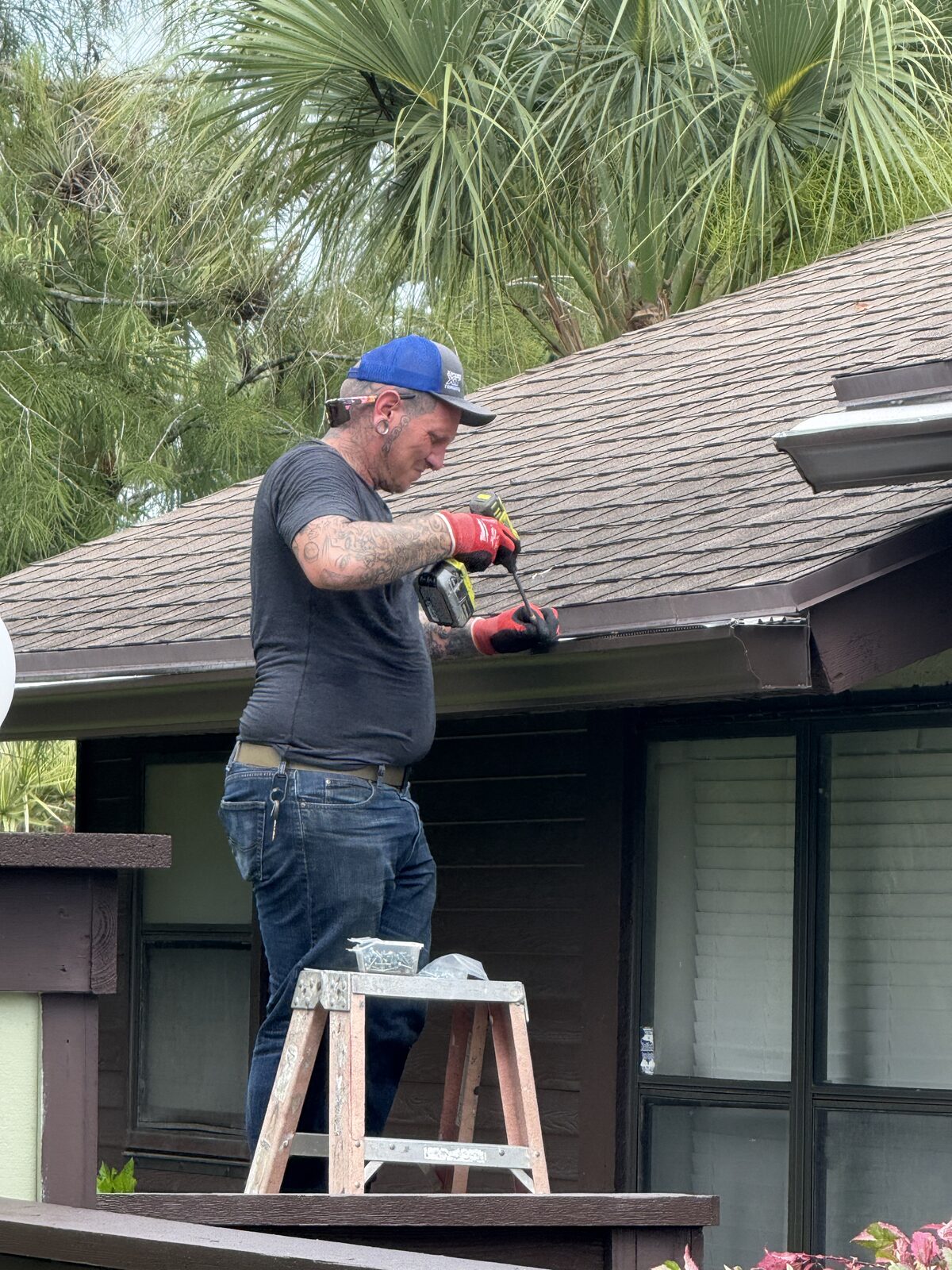
Two crew members on ladders working the eave line of a two-story Tudor-style stucco home in Wellington, Florida during gutter installation
03 · Working the eave of a two-story roofline above the patio.

Specifying It Right

Size, downspouts, guards — in that order

Most gutter disappointment in South Florida traces back to one of three decisions, and homeowners are rarely told any of them.

Gutter size follows roof area, not house size

Five-inch K-style is the residential default nationally and it is fine on a lot of Florida houses. A 6-inch trough carries meaningfully more water — roughly 40 percent more — and pairs with a bigger downspout, which is why it earns its place on long uninterrupted runs, steep roofs, metal roofs that shed almost instantly, and any eave collecting two roof planes through a valley. The decision is made per run, from the contributing roof area, not one size for the whole house because it is easier to order.

Downspouts are the actual bottleneck

A trough only holds water; the downspout is what removes it. A 3x4 downspout moves roughly double what a small 2x3 does, and adding one more outlet often solves an overflow that a bigger gutter would not. Placement matters as much as count — put them where the roof concentrates water, and discharge them where the water is welcome. Dropping a downspout right beside a slab corner or the head of a driveway just moves the erosion three feet.

Guards are a maintenance decision, not a magic one

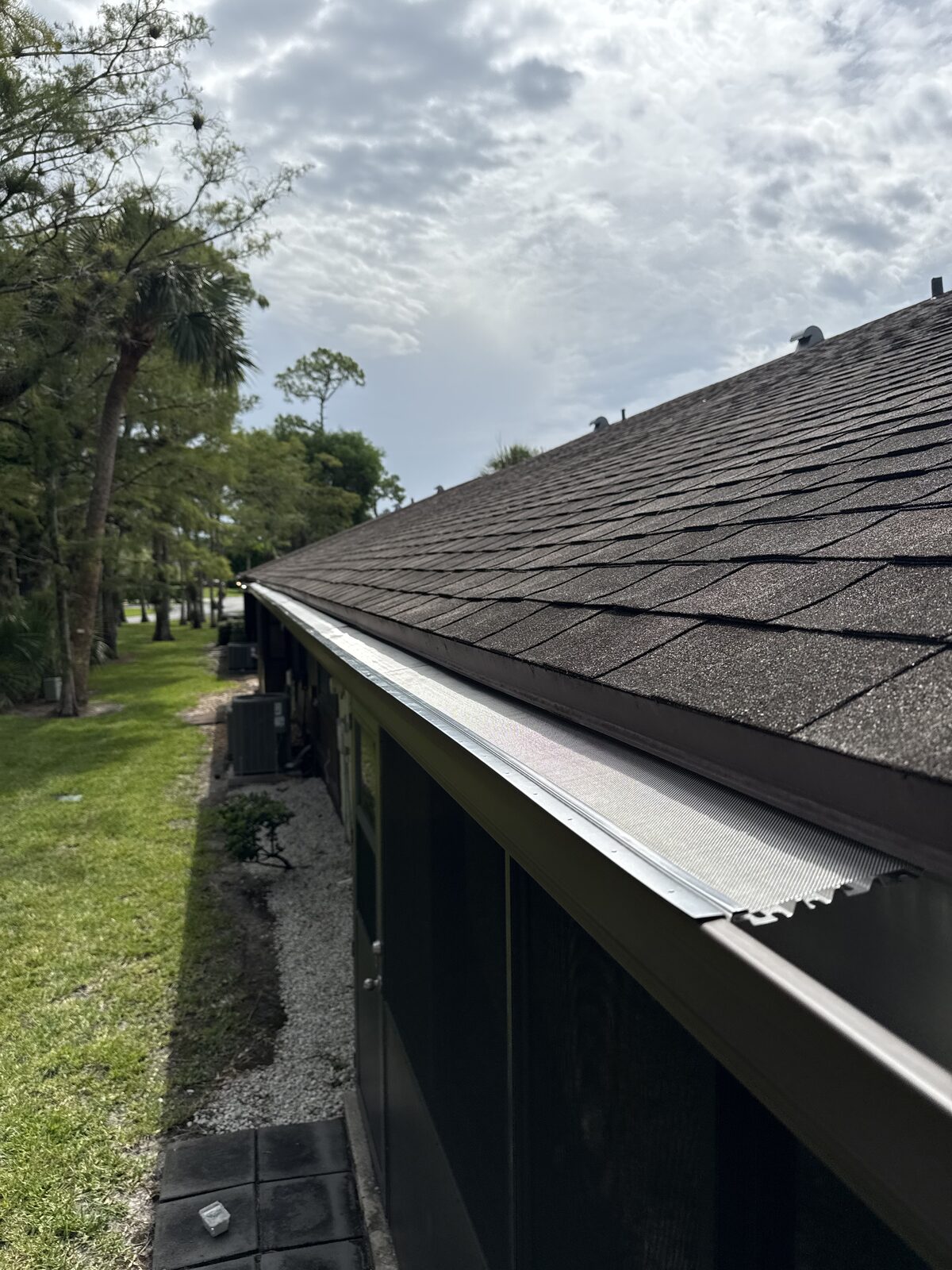
Under pines, oaks, or palms, a mesh or screen guard is usually worth it: it keeps needles and fibre out of the trough, keeps water moving, and keeps the gutter from becoming standing water — which in this climate means mosquitoes within days. It reduces cleaning; it does not abolish it. Anyone selling a lifetime never-clean promise is selling the promise, not the gutter.

One more Florida-specific point: gutters live at the roof edge, the exact place wind pressure peaks in a storm. Hanger spacing, fastener length, and what those fasteners land in are the difference between a gutter that stays on the house and a length of aluminum in the neighbour's yard. If you are already thinking about wind, read hurricane roof damage claims in Palm Beach County and the impact window and door side of the same problem.

Questions, Answered

Frequently asked questions

What makes a gutter seamless, and are they really seamless?

A seamless gutter is rolled out of one continuous strip of aluminum coil to the exact length of your roofline, so there are no joints along the run. The only connections in the whole system are at corners, end caps, and downspout outlets — which is where every gutter eventually leaks. Sectional gutter sold in ten-foot lengths puts a sealed joint every ten feet; on a 40-foot Florida roofline that is three extra places for sealant to fail in the sun.

Do you fabricate the gutters at my house?

Yes. Our roll-forming machine lives in a Grumman step van with the aluminum coil on board, so the gutter is formed in your driveway and carried straight up to the fascia. Nothing is cut to a catalogue length and nothing is trucked in pre-made. It also means an odd run, a bay window return, or a second-story section that measures long can be re-formed on the spot instead of scheduled for another day.

Should I use 5-inch or 6-inch gutters in Palm Beach County?

It depends on the roof area draining into the run, the pitch, and how the roof sheds. As a rule of thumb a 6-inch K-style gutter carries roughly 40 percent more water than a 5-inch and pairs with larger 3x4 downspouts, which is why it is often the right call on steep roofs, long uninterrupted runs, metal roofs that shed fast, and valleys that dump a large area into one spot. West Palm Beach averages around 63 inches of rain a year, most of it in short, hard summer downpours, so sizing for the storm rather than the average is the whole game. We measure the contributing roof area before quoting a size.

Are gutter guards worth it in South Florida?

Under pines, oaks, and palms they usually pay for themselves in ladder trips. A mesh or screen guard keeps needles, palm fibre, and leaf litter out of the trough so the water keeps moving and the gutter does not sit full of wet organic material breeding mosquitoes. Guards reduce cleaning; they do not eliminate it, and any company promising a gutter you never have to look at again is selling you something. We will tell you honestly whether your tree cover justifies them.

How many downspouts does a house need, and where should the water go?

Downspout count and placement matter more than gutter size. Too few and the trough overflows at the low end no matter how big it is. We place them where the roof actually concentrates water — valleys, long runs, and inside corners — and we look at where the discharge lands. In Florida the point is to move roof water away from the slab and away from walkways, not just off the roof. Splash blocks, extensions, or a tie-in to existing drainage all get discussed before we fabricate.

Do gutters need a permit, and does my HOA have to approve them?

Whether a permit is required depends on the jurisdiction and on what else the work touches — replacing fascia, decking, or roof edge changes the answer. We confirm it with the building department before we fabricate, and where gutters are part of a re-roof the roofing permit governs the whole scope. HOA architectural review is the more common hurdle: most associations control gutter and downspout colour, and some control profile. We manage associations ourselves (CAM34850, firm CAB3255), so we know what a board needs to see and we would rather submit it first than tear it down later.

Can you replace gutters at the same time as a roof?

That is the right way to sequence it, and it is where holding both licences matters. Gutters come off for a re-roof anyway, drip edge and roof edge detail have to be set before the gutter hangs, and rotten fascia is only visible once the old gutter is down. Bell Engineering is a Certified General Contractor (CGC1528750) and a Certified Roofing Contractor (CCC1332751), so the roof, the fascia and the gutters run as one scope with one crew and one warranty instead of three trades pointing at each other.

What are the gutters made of, and can you match my trim colour?

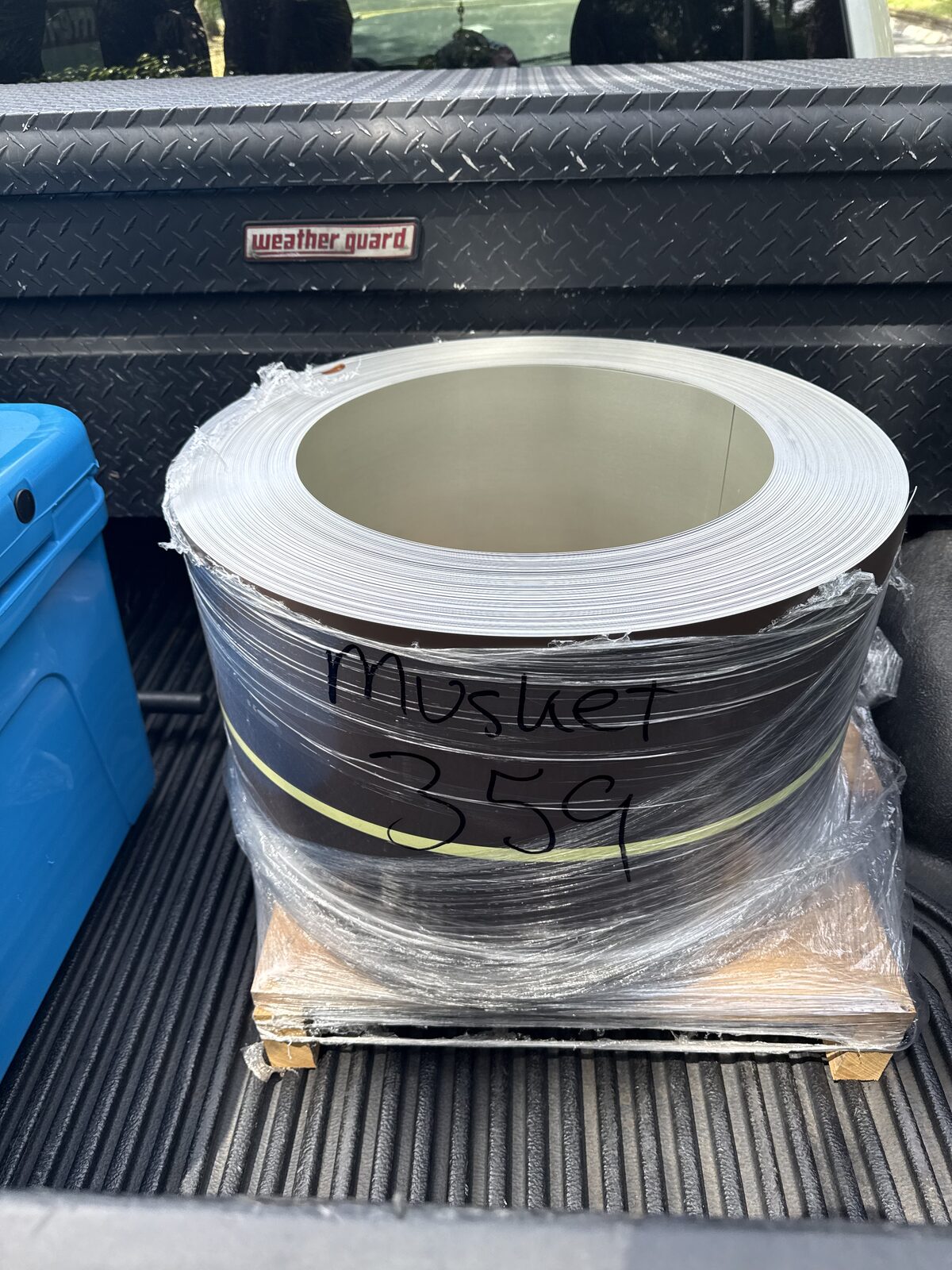
We form them from aluminum coil stock with a baked-on factory finish, which comes in a wide range of standard colours — the Royal Palm Beach job on this page ran in a musket brown to match existing fascia and screen enclosure. We match to what is already on the house, not to whatever is on the truck. Aluminum is the standard for Florida coastal residential work because it does not rust; heavier gauges and other metals are available where a job calls for them.

How do I know my existing gutters are failing?

Look for water sheeting over the front edge in a normal rain (undersized or blocked), a sagging run or pulled-away section (failed hangers or rotted fascia behind it), rust or paint blistering on the fascia board, stains and erosion trenches in the bed below the eave, and joints weeping at seams and end caps. Inside, look for damp at the base of walls after a storm. Any of those is worth a look before the next wet season, not after.

How much do seamless gutters cost?

It depends on linear feet, one story or two, gutter size, how many downspouts and where they run, whether guards are added, and whether old gutter and rotted fascia have to come off first. There is no honest flat rate over the phone, and estimates are free. Call (561) 779-3213 and we will measure the roofline and give you a real number.

Do you do gutter work for HOAs and commercial buildings?

Yes. Multi-building association work is routine for us — the Royal Palm Beach project on this page was a community job — and we are equally set up for commercial buildings. Because the same company manages associations and holds the GC and roofing licences, a board can put gutters, roof, concrete restoration and fascia repair into one contract instead of coordinating four vendors.

Do you repair existing gutters, or only replace them?

Both. Re-hanging a sagging run, replacing failed hangers, resetting pitch, adding a downspout where water is overshooting, resealing corners and end caps, and repairing the fascia behind the gutter are all common calls. Replacement makes sense when the trough itself is undersized, corroded, or full of failed seams — we will tell you which one you actually have.
Before the next wet season. Let’s talk.

Free estimate, 24-hour response, and a licensed contractor who answers his own phone.

More from the drawing set

☎ Call (561) 779-3213 — Free Estimate