Storm cleanup in Palm Beach County, FL is not scheduled work. Nobody books a hurricane. The difference between an outfit that has done this before and an outfit that added it to a list after the last storm shows up immediately — in whether the truck, trailer and machine arrive together, whether the debris is separated the way the haul-off site wants it, and whether the crew can keep a residential street passable while it works.
Bell Land Services brings federal-scale disaster-debris experience to Palm Beach County lots. Our owned equipment — a Bobcat T740 with a 60" grapple, $1,385 per day with operator — handles land clearing, lot prep, and storm cleanup alike. Every storm-cleanup job is quoted after we see the lot, because no two storms leave the same mess behind. Call (561) 779-3213 and we'll tell you honestly what it will take.
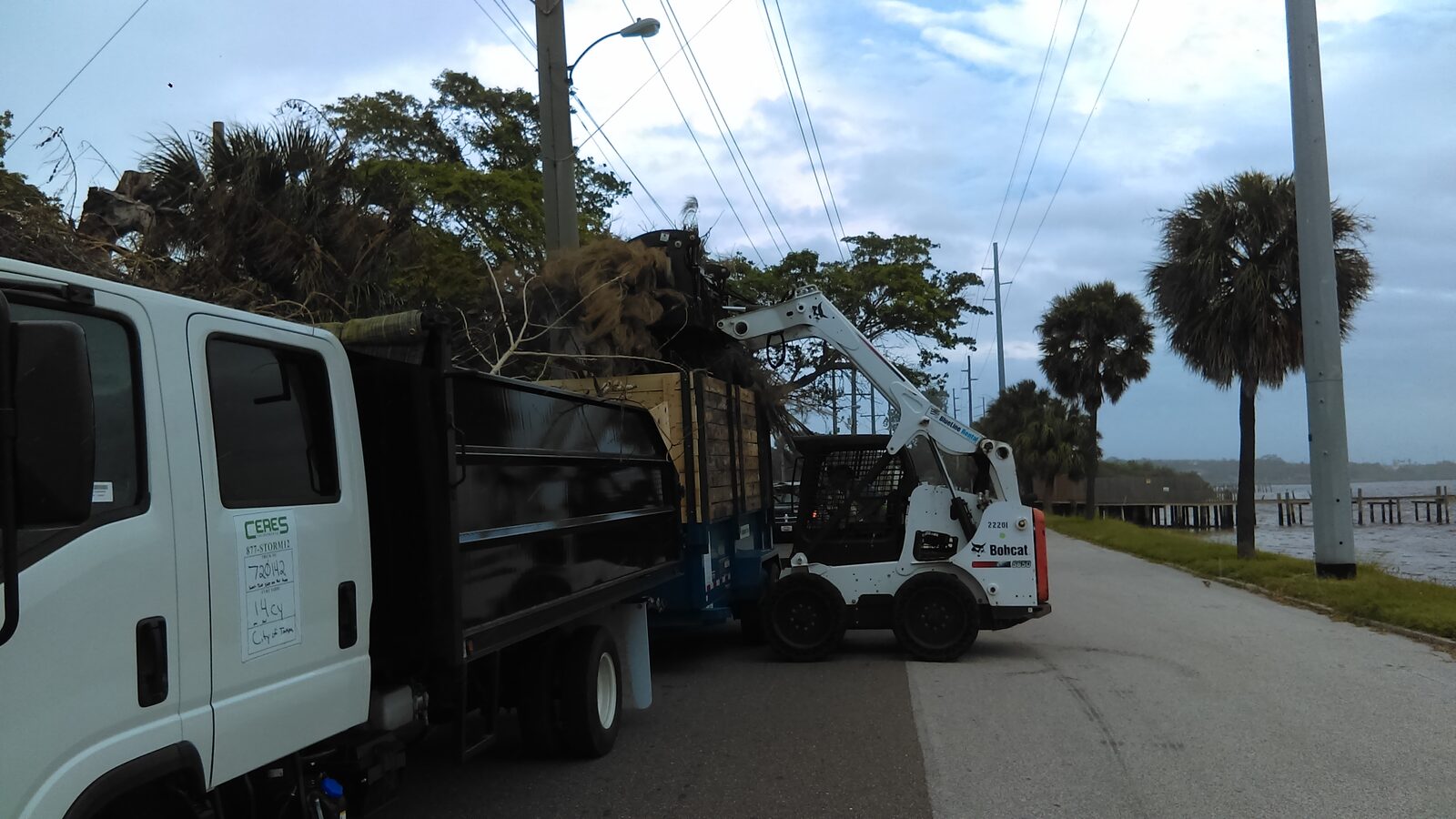
Hurricane Irma reached the Tampa Bay area in September 2017. In the weeks that followed, Randolph Scott Bell ran storm-debris cleanup through Tampa and Ybor City for Ceres Contractors (Ceres Environmental Services) — one of the largest disaster-debris contractors in the country. This is what the work looked like from inside the cab.
The equipment: Isuzu NPR dump trucks pulling loaded dump trailers, and a Bobcat skid steer fitted with a root-and-brush grapple, working downed palm fronds and storm debris curbside, house by house, through residential neighborhoods. Disaster-debris work is measured by the cubic yard and ticketed load by load — the Ceres ticket taped inside the windshield in the photo below reads 14 CY — City of Tampa.
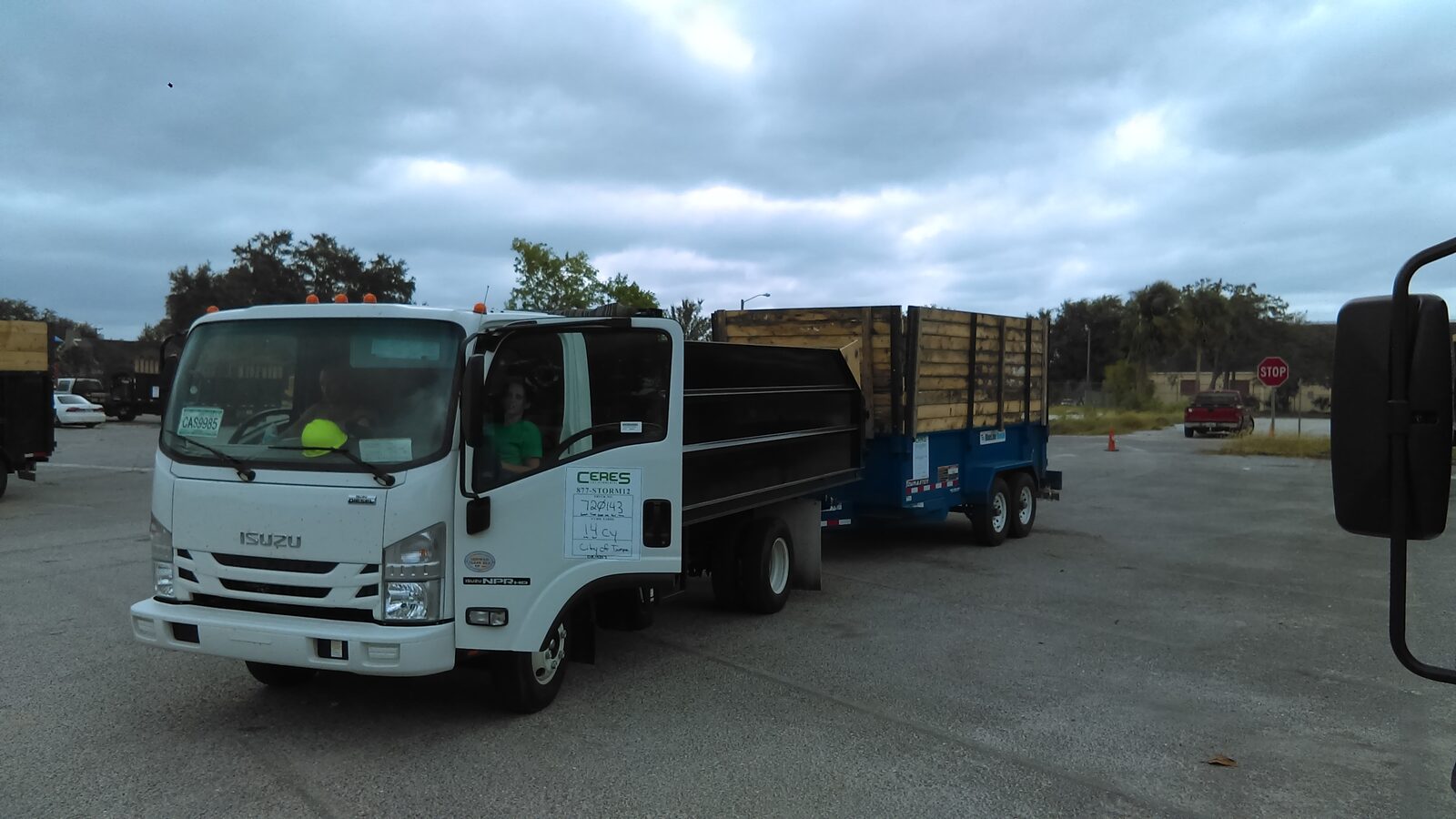
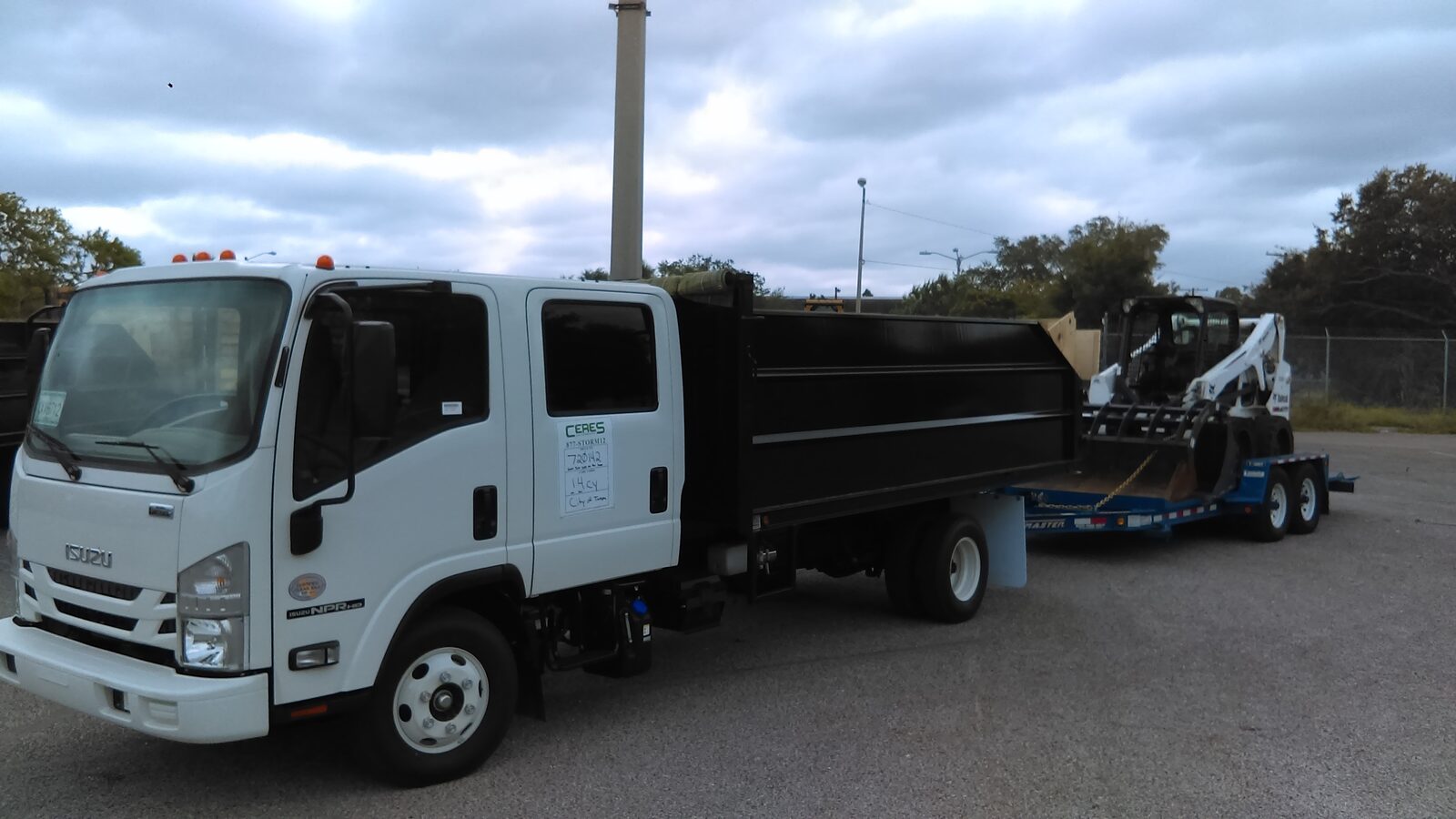
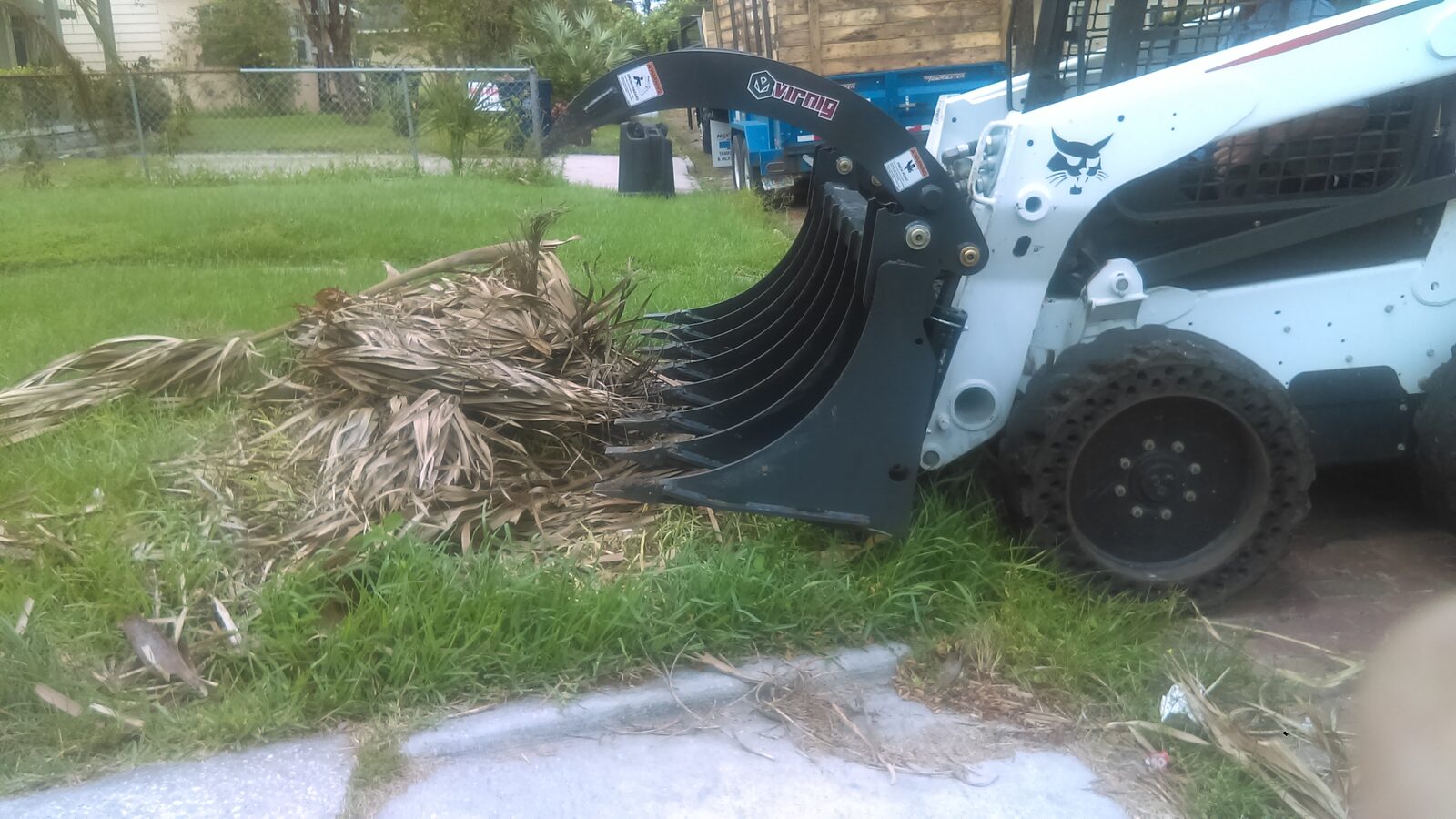
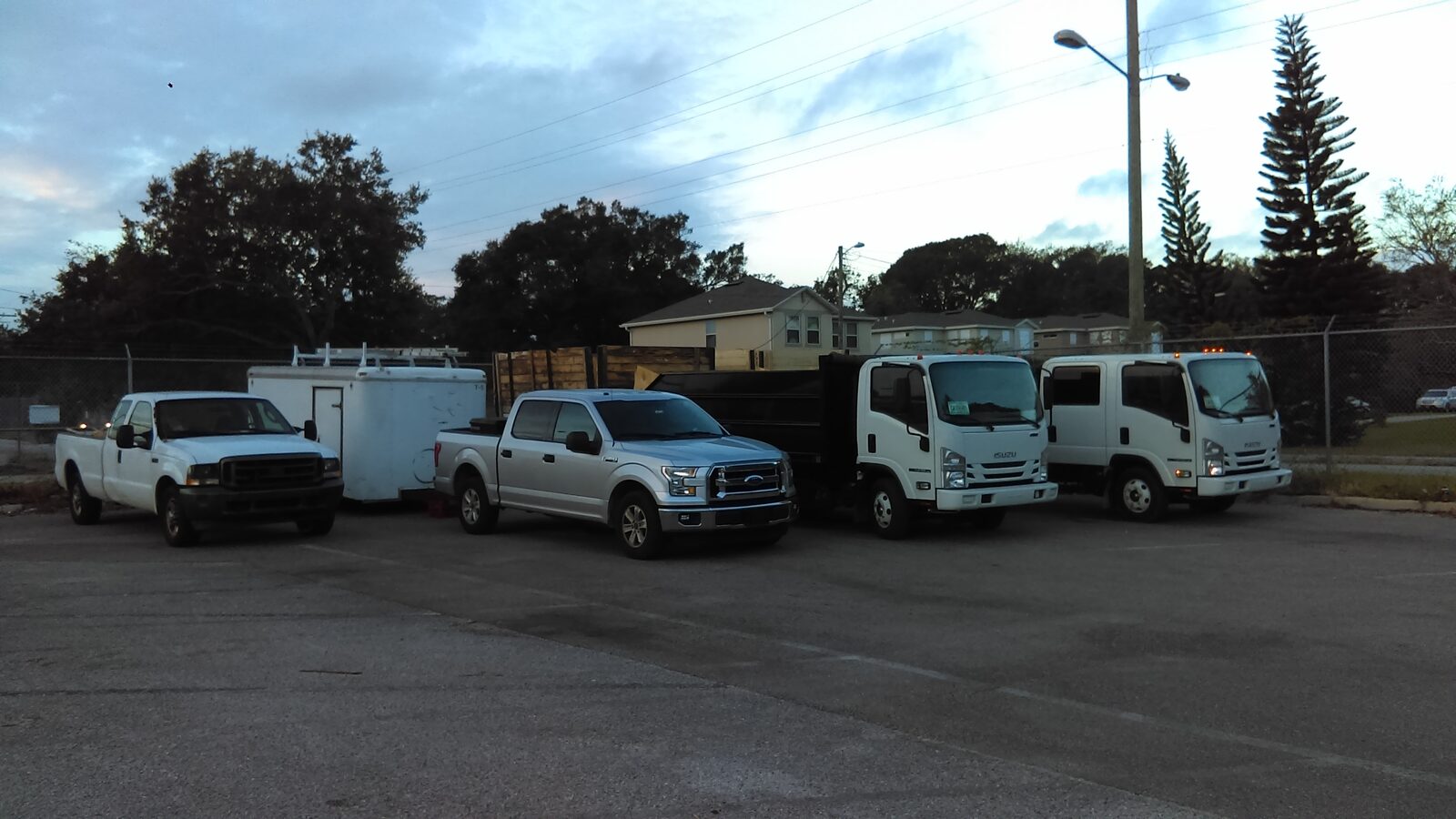
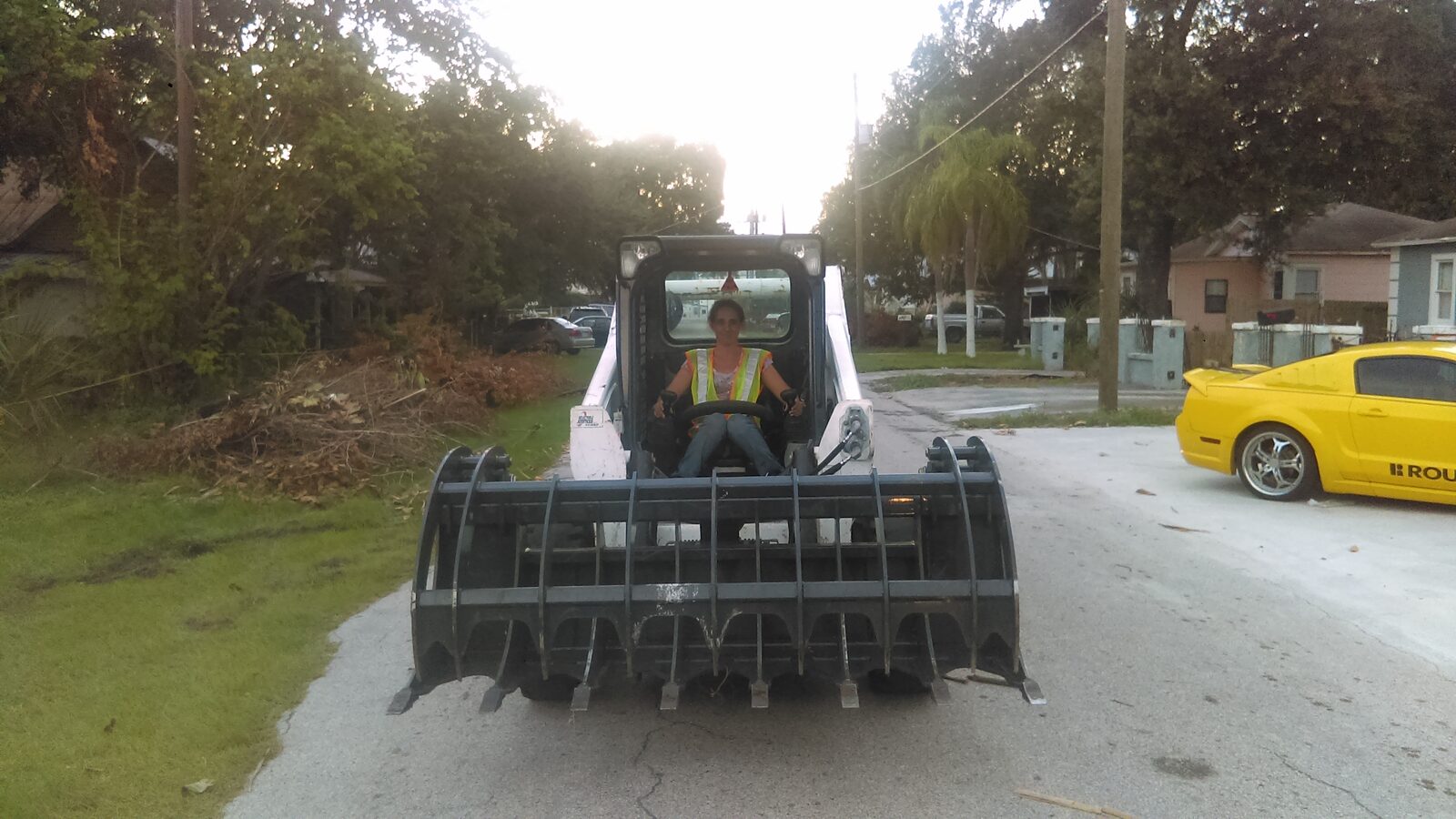
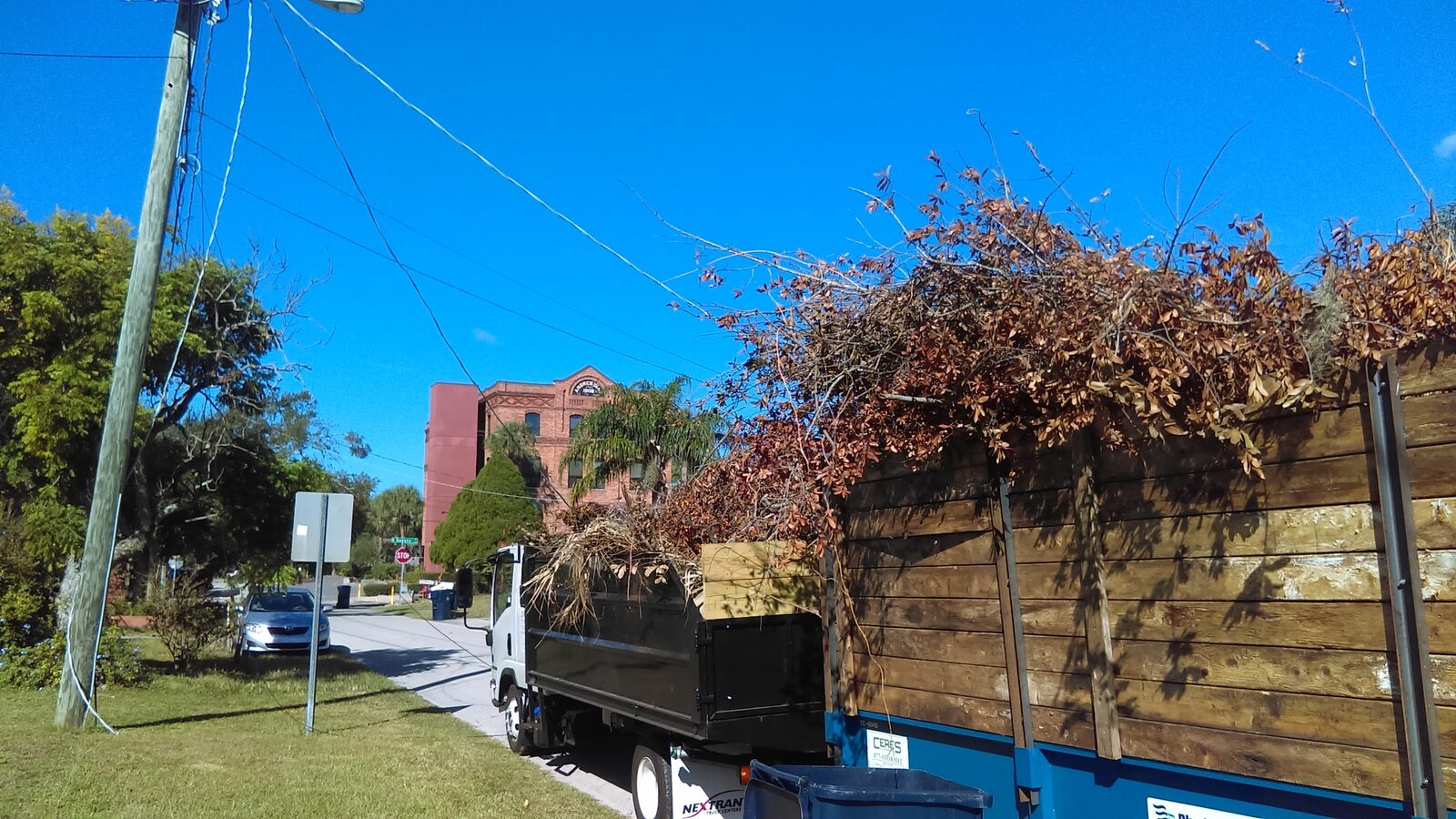
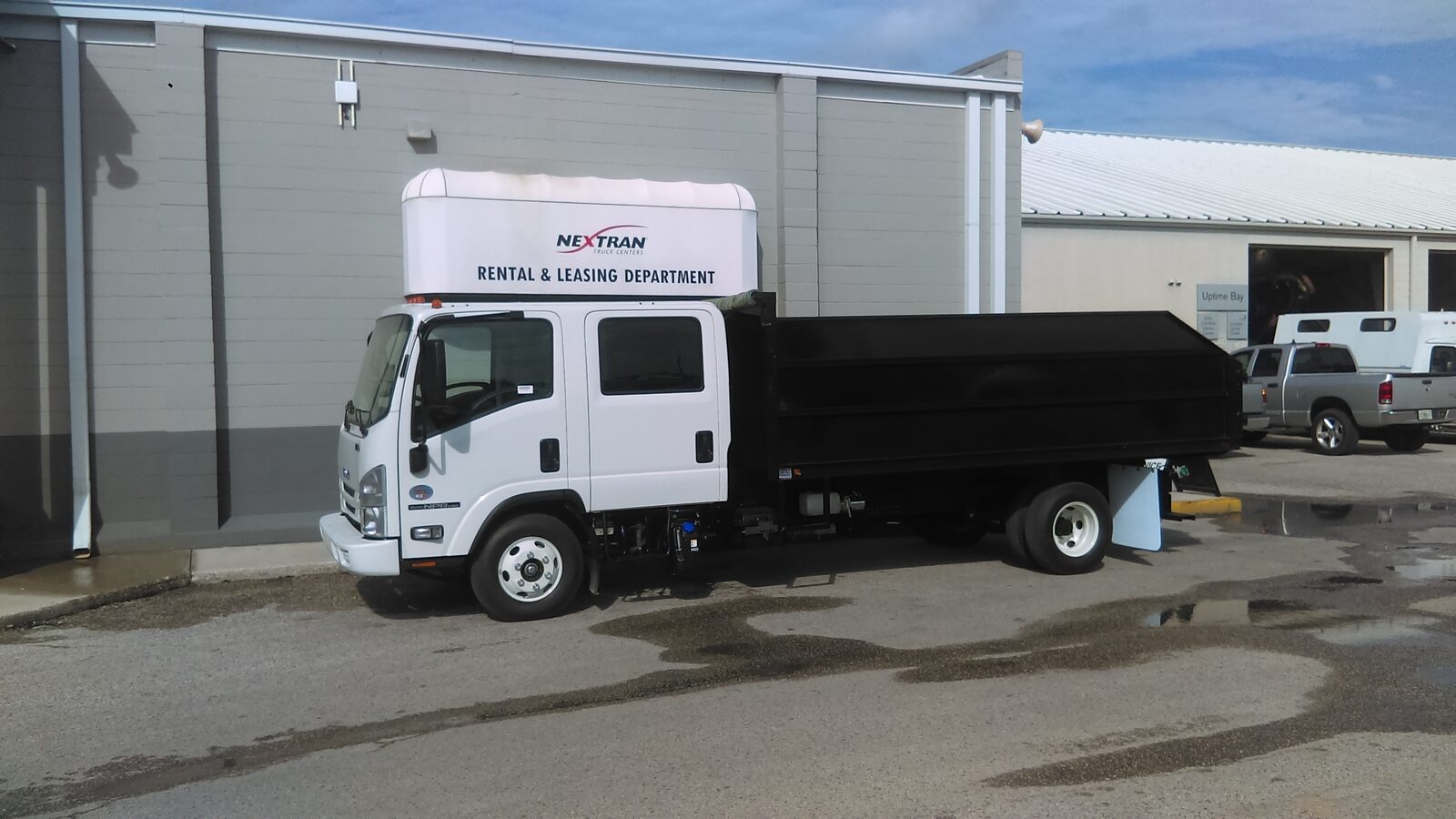
The scale is different — a Loxahatchee or Acreage property instead of a city block — but the discipline is the same. We show up with the truck, trailer, and machine together, not a crew figuring it out on arrival.
Before any cleanup crew arrives, a few basics protect you and the people working your lot:
- ⚡ Downed power lines. Treat every downed line as live until the utility confirms otherwise. Stay back and keep others back — this is not a debris pile to clear yourself.
- 🏚️ Structural hazards. A leaning tree, a cracked limb still hanging, or storm damage to a roof or carport can shift or fail without warning. Give damaged structures and trees room until someone who knows what they're looking at has assessed them.
- 📷 Document the damage before cleanup starts. Photos of the lot, the debris, and any structural damage — taken before anything is moved — are worth having on hand. Do this before a crane, grapple, or crew changes what the property looks like.
- 🚧 Call a crew that can keep the street passable. The goal in the first days after a storm is a lot and driveway you can actually use, not just a pile moved from one spot to another. That's the difference a crew with the right equipment on site day one makes.
This is general safety guidance, not an insurance or FEMA process — for anything involving an insurance claim or federal disaster assistance, work directly with your carrier or the relevant agency. Check with Palm Beach County for any storm-specific permitting or debris-collection rules that may apply to your address before you start moving material yourself.