Sugarcane
Glazed Pork Bowl
Sugarcane · Snap Beans · Cabbage
The second dish on America's winter board, and the one that is hardest to make anywhere else. Its sweetener is not maple, honey or brown sugar — it is cane syrup pressed on-site from the sugarcane planted along The Bell Farm's west boundary, in the one county that grows most of the sugarcane in the United States. The cane harvest and the snap-bean harvest overlap for exactly these months, which is the only reason this bowl is a winter dish. Below is the recipe as we run it, the technique notes that decide how it turns out, and the local shopping list.
4
Servings — 2 lb of shoulder, one pot
~20 min
Prep — cubing the pork and a blanch
60–75 min
Covered simmer, mostly unattended
Nov–Feb
When it belongs on the board
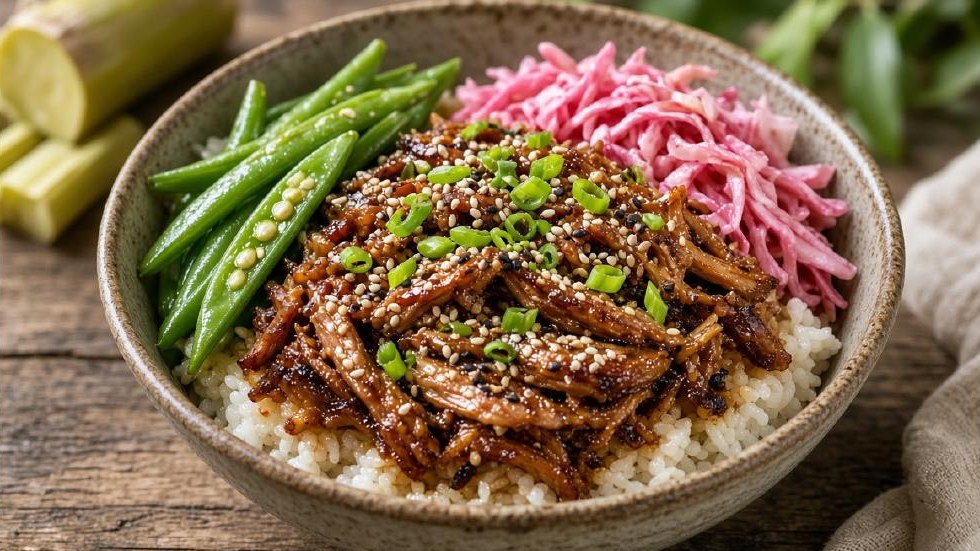
Page 3 of America's seasonal menu — with the cut cane it is glazed with sitting behind the bowl.
Why This Is a Winter Dish Here
Almost every sticky glazed pork bowl you will find is sweetened with something that came off a shelf — brown sugar, honey, maple, hoisin. This one is sweetened with a crop that is standing in a field four hundred feet from the truck. That difference is the entire dish, and it is only available for part of the year.
Florida's sugarcane harvest runs from roughly late October into mid-April, and Palm Beach County is not a minor player in it: the county accounts for about 70 percent of Florida's sugarcane acreage and roughly three-quarters of its tonnage, according to UF/IFAS. When people picture the Glades, they are picturing cane. A dish built on cane syrup is, in this specific county, a local dish in the plainest possible sense.
Small-batch syrup cane follows a tighter window than the mills do. The stretch between Thanksgiving and the New Year is generally when cane cut for syrup is at its best — the longer it stands, the more sugar it carries, right up until frost risk and the end of the stalk's useful life close the door. That is the window our own cane along the west boundary gets pressed in, and it lines up almost exactly with the county's snap-bean and cabbage harvest. Three ingredients, one calendar. Take the dish out of those months and you are cooking a different, lesser version of it with a jar from the store.
The pork is the one part that does not care what month it is, which is why it anchors the bowl. Pork shoulder is a working muscle full of collagen and fat — the two things a long, sweet, acidic simmer converts into gelatin and gloss. Cubing it instead of cooking a whole shoulder is the deliberate choice that makes this a weeknight dish rather than an all-afternoon one, and it is covered in the cook's notes below.
The Recipe
Sugarcane Glazed Pork Bowl · Serves 4 · About 20 minutes prep, a 60–75 minute covered simmer · One pot. This is the recipe as printed on page 3 of America's seasonal menu, unchanged.
Ingredients — serves 4
- 2 lb pork shoulder, cubed
- 1 cup fresh-pressed cane syrup (or dark brown sugar + water)
- 2 tbsp soy sauce, 1 tbsp rice vinegar, 1 clove garlic, 1 tsp ginger
- 2 cups cooked rice
- 2 cups snap beans, blanched
- 1 cup pickled cabbage
- Sesame seeds, scallion
Method — about 90 minutes, mostly hands-off
1 · Sear the pork
Sear pork in a hot pot until browned.
2 · Build the glaze
Add cane syrup, soy, vinegar, garlic, ginger.
3 · Simmer until tender
Simmer covered 60–75 min until fork-tender, glaze thickened.
4 · Shred the pork
Shred lightly — the pieces should still read as pieces.
5 · Build the bowls
Rice, pork, snap beans, pickled cabbage, sesame and scallion on top.
Source locally: Sugarcane — pressed on-site from The Bell Farm's own west-boundary sugarcane planting. Pork — Okeechobee Prime Meat Market. Snap beans and cabbage — Bedner's Farm Fresh. That line is printed on the menu page itself, and the addresses and phone numbers are in the shopping list further down.
Cook's Notes — What Actually Decides How This Turns Out
The recipe above is complete and you can stop there. These are the things we have learned running it off a truck window, offered as general kitchen guidance rather than gospel.
1 · Cubing the shoulder is the whole schedule
A whole pork shoulder is a four-to-six-hour proposition. The same shoulder cut into rough one-to-two-inch cubes gets to fork-tender inside the 60–75 minutes in step three, because you have multiplied the surface area and shortened the distance heat has to travel. You give up a little of the long-roast texture and you get a weeknight dish. Cut them roughly even; a pot with half-inch scraps and three-inch chunks in it finishes at two different times.
2 · Sear in batches, and do not rush it
Two pounds of cubed pork dropped into a pot at once will steam rather than brown — the pieces release water faster than a crowded pan can drive it off, and you lose the browned crust that carries most of the savory depth in a dish this sweet. Work in two batches with space between the cubes, get real color on at least two sides, and let the fond build on the bottom of the pot. The syrup will lift all of it when it goes in.
3 · Cane syrup is not maple, and not molasses
Fresh-pressed cane syrup is cane juice cooked down — grassier, greener and less one-note sweet than refined sugar, and without the bitter mineral edge of blackstrap molasses. If you cannot get it, the recipe's own substitute is dark brown sugar plus water: match the cup, loosen it with enough water to pour, and expect a rounder, more caramel-forward glaze. It is a good dish. It is just not the same dish, and the difference is the reason the cane is on the menu page at all.
4 · The last ten minutes are where it is won or lost
Covered, the pot is forgiving. The moment you take the lid off to tighten the glaze, it stops being forgiving — a cup of sugar reducing over direct heat goes from glossy to scorched in under a minute, and burnt cane is bitter all the way through and cannot be fixed. Stay at the pot for that stretch, keep the heat moderate, and stop while the glaze still moves when you tilt the pan. It thickens further off the heat.
5 · Blanch the beans separately, and shock them
The snap beans are listed blanched for a reason: they are the only crunch and the only clean green flavor in the bowl, and anything that goes into the glaze comes out the color of the glaze. Two to three minutes in salted boiling water, then straight into ice water to stop them cold. Drain them well — wet beans dilute the glaze on contact and slide off the rice.
6 · The pickled cabbage is not a garnish
A cup of pickle against two pounds of sweet glazed pork is the balance the whole bowl rests on. Take it away and the dish reads as dessert by the fourth bite; leave it in and the acid resets your palate every time you cross it. This is also why the rice is plain — it is the neutral floor the sweet and the sour meet on. If you are adjusting anything, adjust the pickle up, never down.
7 · The pork is the make-ahead
Steps one through four hold beautifully and taste better the next day, which is unusual and useful — the glaze sets into the shredded meat overnight and reheats gently with a splash of water. What does not hold is assembly: beans lose their snap, cabbage bleeds into rice, scallion wilts. So build the pork ahead, keep the three toppings separate and cold, and assemble to order. That is exactly the workflow on the truck.
8 · Why it works off a window
Practical, not stylistic: a bowl is eaten standing up with one hand and a fork, needs no knife, holds its heat far longer than a plate, and can be built in fifteen seconds from four components that are already finished. Every dish on America's board has to survive a line of people and a Florida evening. This one is the easiest of the winter six to serve fast, which is why it sits second on the board rather than further down.
The Cane Behind the Glaze
Sugarcane is grown and pressed on-site at The Bell Farm, along the west boundary of the property at 16140 Okeechobee Blvd in Loxahatchee. It is the only ingredient on the entire 26-dish seasonal menu that travels a distance measured in feet, and it is the reason this bowl exists as a signature rather than a variation on somebody else's glazed pork.
Cane is also the most honest illustration of what a seasonal board actually costs an operator. A commercial mill runs from late October into April on a schedule that has nothing to do with anyone's event calendar; a small planting pressed for syrup runs on an even narrower one. When the cane is not in, this dish is not on. We would rather take it off the board than glaze pork with a shipped-in substitute and keep the name — which is the same rule the tomato shakshuka lives under, and every other dish on the winter menu.
If you want to see the cane rather than read about it, the farm is an FDACS-registered agritourism operation and the truck does walk-up service on-site. A farm stay in the cane-cutting weeks between Thanksgiving and the New Year puts you on the property in the one stretch of the year when this dish is at its actual best.
Where to Buy the Ingredients — the Local Shopping List
Every recipe on America's menu carries a "source locally" line, because a farm-to-table claim that cannot name the farm is just a font choice. These are the suppliers we actually buy this dish from, off the call sheet printed on the back page of the menu.
The Bell Farm — on-site
Buy here: the sugarcane. Grown and pressed on-site along the west boundary — the shortest supply line on the menu, and the ingredient this dish is named for.
Visit the farm →
Okeechobee Prime Meat Market
Buy here: the pork shoulder. USDA Prime and dry-aged — brisket, pork and Tomahawk ribeye. Ask for wholesale or event pricing if you are cooking for a crowd. Tell them you want shoulder rather than loin: this dish needs the collagen.
Bedner's Farm Fresh
Buy here: the snap beans and the cabbage. General produce and U-pick — beans, cabbage, tomatoes, squash, kale, corn, collards, strawberries and citrus. Both of this bowl's vegetables are in their Palm Beach County window at the same time the cane is.
Swank Specialty Produce
The closest grower to the truck, and our primary source for specialty and tropical produce — a mile and a half of road between the field and the pan. Worth the stop for whatever is best that week alongside the beans.
One honest caveat, and it is printed on the menu's own call sheet: the rice in this bowl is not part of the local sourcing plan. Dry goods and dairy — rice, cornmeal, tortillas, beans, cheese — come through a standard wholesale food distributor. We would rather say that plainly than let a "farm-to-table" label do work it has not earned. The cane, the pork and the two vegetables are the local part of this dish, and those are the parts that decide how it tastes.
Would Rather Someone Else Made It?
This bowl runs off the window from November through February, and it is the fastest thing on the winter board to serve to a long line — four finished components, fifteen seconds to build, eaten standing up without a knife. America the Food Truck is a state-licensed Mobile Food Dispensing Vehicle (MFD1654011) working out of The Bell Farm in Loxahatchee, and the winter calendar is the busiest one we run.
Private catering starts at $800 per event, wedding and event packages start at $2,500, and a seated private farm dinner at The Bell Farm is $150 per guest with a ten-guest minimum. The catering cost guide walks through what actually drives a quote, and the winter menu page covers what a November-to-February date means for weather, daylight and where a truck can park.
Sugarcane Glazed Pork Bowl — FAQ
What is a sugarcane glazed pork bowl?
Cubed pork shoulder seared hard, then simmered covered in cane syrup with soy sauce, rice vinegar, garlic and ginger until it is fork-tender and the liquid has reduced to a sticky glaze. It is shredded lightly and built into a bowl over plain rice with blanched snap beans, pickled cabbage, sesame seeds and scallion. Ours is sweetened with cane syrup pressed on-site at The Bell Farm in Loxahatchee, which is what separates it from the brown-sugar and hoisin versions of the same idea.
How long does it take to make?
About an hour and a half for four servings, and most of it is unattended. Roughly 20 minutes of prep — cubing two pounds of shoulder, blanching the beans, mincing garlic and ginger — then a 60 to 75 minute covered simmer while you do something else, and a few minutes to shred the pork and build the bowls. The only stretch that needs your full attention is the end of the simmer, when the glaze tightens.
What is cane syrup, and how is it different from molasses or maple syrup?
Cane syrup is sugarcane juice cooked down until it thickens — one ingredient, nothing removed. Molasses is what is left over after sugar crystals have been spun out of that juice, so it is darker and carries a bitter mineral edge, and blackstrap most of all. Maple is a different plant entirely and tastes like it. Cane syrup sits in the middle: sweet but grassier and greener, with a clean finish. In a savory glaze that difference is obvious, which is why the menu names it specifically.
Can I substitute brown sugar for the cane syrup?
Yes — the recipe is written with that substitute built in: dark brown sugar plus water in place of the cup of cane syrup. Match the volume and add enough water to make it pourable so it behaves like a syrup in the pot. The result is rounder and more caramel-forward, and it is a good bowl. It is simply not the dish the cane makes, and that is worth knowing before you decide the recipe underdelivered.
What cut of pork should I use, and can I use a different one?
Pork shoulder, cubed — sold as Boston butt or picnic shoulder. It is a working muscle full of collagen and intramuscular fat, and a long moist simmer turns both into the gelatin and gloss the glaze needs. Lean cuts are the wrong tool here: tenderloin or loin chops have nothing to break down and will go dry and stringy in the same 60 to 75 minutes that makes shoulder tender. If you want a leaner bowl, shorten the simmer and accept a thinner glaze, or cook a different dish.
Why cube the pork instead of slow-cooking a whole shoulder?
Time. A whole shoulder is a four-to-six-hour cook; the same meat in rough one-to-two-inch cubes reaches fork-tender inside 60 to 75 minutes because there is far more surface area and far less distance for heat to travel. You also get more browned surface per bite, which matters in a dish this sweet. Cut the cubes roughly even — a pot holding both half-inch scraps and three-inch chunks will have some pieces dry before others are done.
How do I keep the glaze from burning?
Keep the lid on for the long simmer and stay at the pot once it comes off. A cup of sugar reducing over direct heat turns from glossy to scorched in under a minute, and burnt cane is bitter all the way through with no way back. Use moderate heat, stir the bottom, and pull it while the glaze still moves when you tilt the pot — it keeps thickening off the heat and again as it cools onto the shredded pork.
What are snap beans — are they the same as green beans?
Same thing, and Florida growers usually call them snap beans: the whole pod is eaten and it snaps when you break it. They are a major Palm Beach County winter crop, harvesting in the same months as the cabbage and the cane, which is why all three end up in one bowl. Blanch them two to three minutes in salted water and shock them in ice water — they are the only crunch in the dish, so cook them separately and never in the glaze.
What kind of pickled cabbage, and can I skip it?
A quick pickle rather than a fermented kraut — shredded cabbage held in a vinegar brine long enough to soften and go sharp. Red cabbage is what you see in the menu photograph, and it is what gives the bowl its pink edge; green cabbage tastes the same and looks quieter. Do not skip it. One cup of acid against two pounds of sweet glazed pork is the balance the whole dish rests on, and without it the bowl reads as dessert by the fourth bite.
Can I make it ahead of time?
The pork, yes — and it is better for it. Steps one through four hold in the fridge and improve overnight as the glaze sets into the shredded meat; reheat gently with a splash of water to loosen it. What does not hold is the assembled bowl: beans go limp, cabbage bleeds into the rice, scallion wilts. Cook the pork ahead, keep the three toppings separate and cold, and build to order. That is precisely how it runs on the truck.
Is this recipe gluten-free or dairy-free?
There is no dairy in it as written. Gluten depends on your soy sauce — most conventional soy sauce is brewed with wheat, so swap in tamari or a certified gluten-free soy sauce if that matters, and check your rice vinegar and your pickle brine while you are at it. If you are asking because of an event, tell us your guests' restrictions when you book rather than on the day and we will build the board around them.
When is Florida sugarcane actually in season?
Florida's sugarcane harvest runs from roughly late October into mid-April, and Palm Beach County grows most of it — about 70 percent of the state's acreage and around three-quarters of its tonnage, per UF/IFAS. Cane cut for syrup follows a tighter window: the stretch from about Thanksgiving to the New Year is generally when it is at its best, since the longer the cane stands the more sugar it carries. That is the window our own west-boundary planting gets pressed in.
Where can I buy the ingredients locally in Palm Beach County?
Pork shoulder from Okeechobee Prime Meat Market on Wabasso Drive in West Palm Beach, about 14 miles out, which is where ours comes from. Snap beans and cabbage from Bedner's Farm Fresh on Lee Road in Boynton Beach, which also runs U-pick. Swank Specialty Produce on North Road in Loxahatchee is the closest grower to the truck at a mile and a half. The sugarcane is the one thing you cannot buy on that list — it is pressed on-site at The Bell Farm.
When is this dish actually on the truck?
November through February, when the cane, the snap beans and the cabbage are all harvesting here at once. America runs a seasonal board rather than a fixed one, so the winter dishes come off when the winter crops do. The winter menu page has the month-by-month crop calendar behind that decision, and the full seasonal menu has all 26 dishes with their recipes.
Can you cater this for an event?
Yes, in season, and it is the one we recommend first for a long line — four finished components assemble in seconds and the bowl holds heat while guests move. Private catering starts at $800 per event and wedding and event packages start at $2,500; a seated farm dinner at The Bell Farm is $150 per guest with a ten-guest minimum. America is a state-licensed Mobile Food Dispensing Vehicle (MFD1654011) and an FDACS-registered agritourism operation at 16140 Okeechobee Blvd, Loxahatchee, FL 33470. Call (561) 779-3213.